
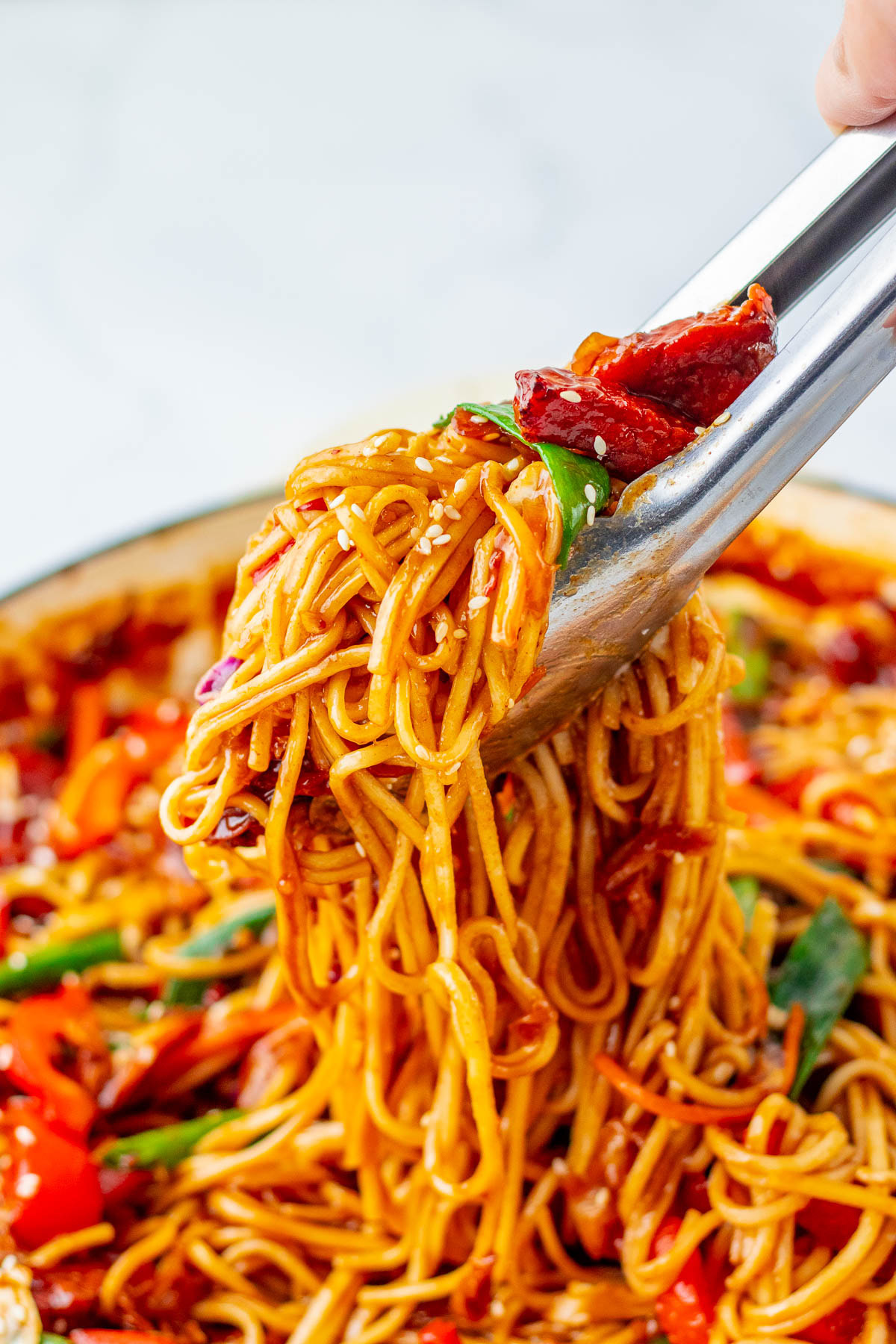
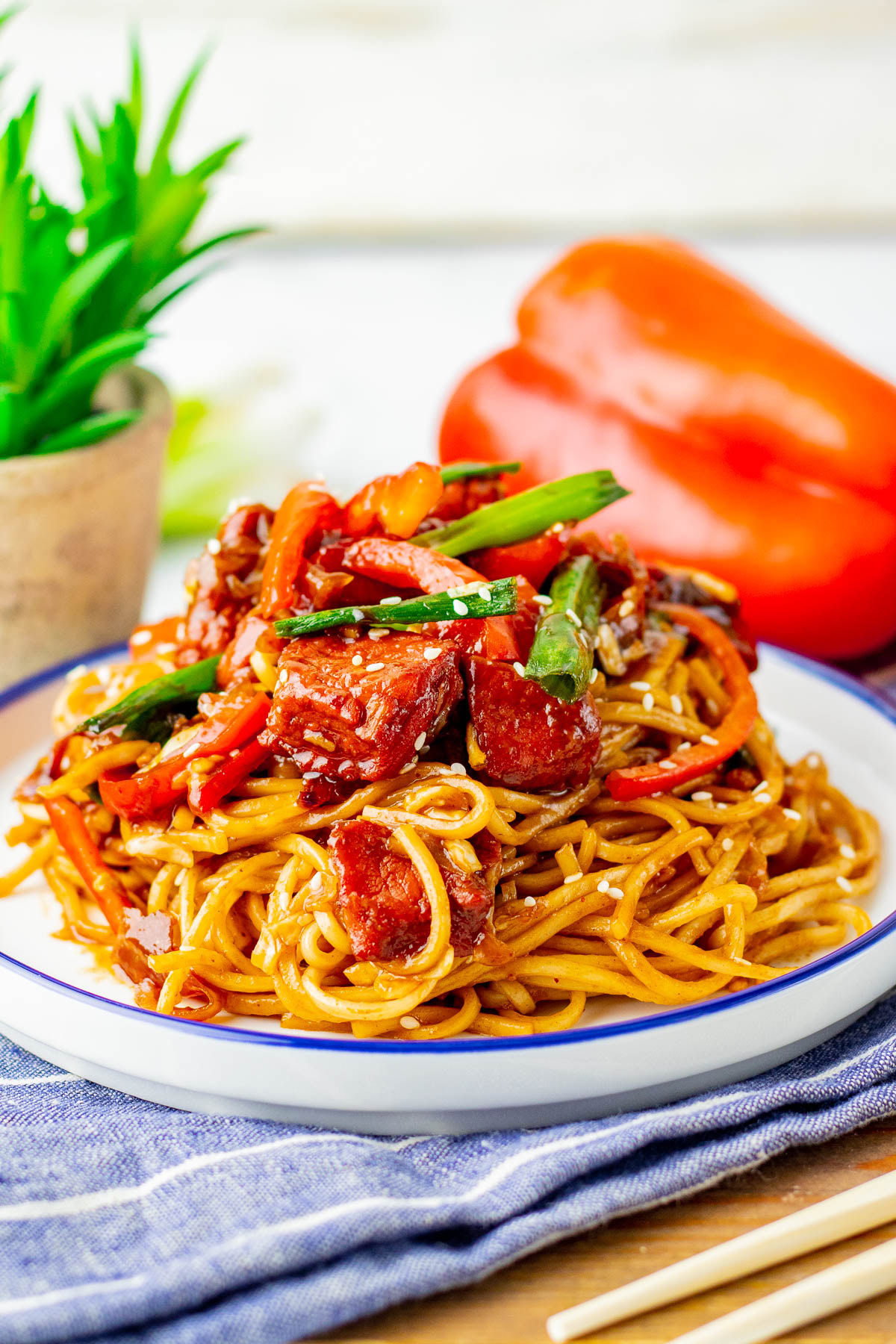
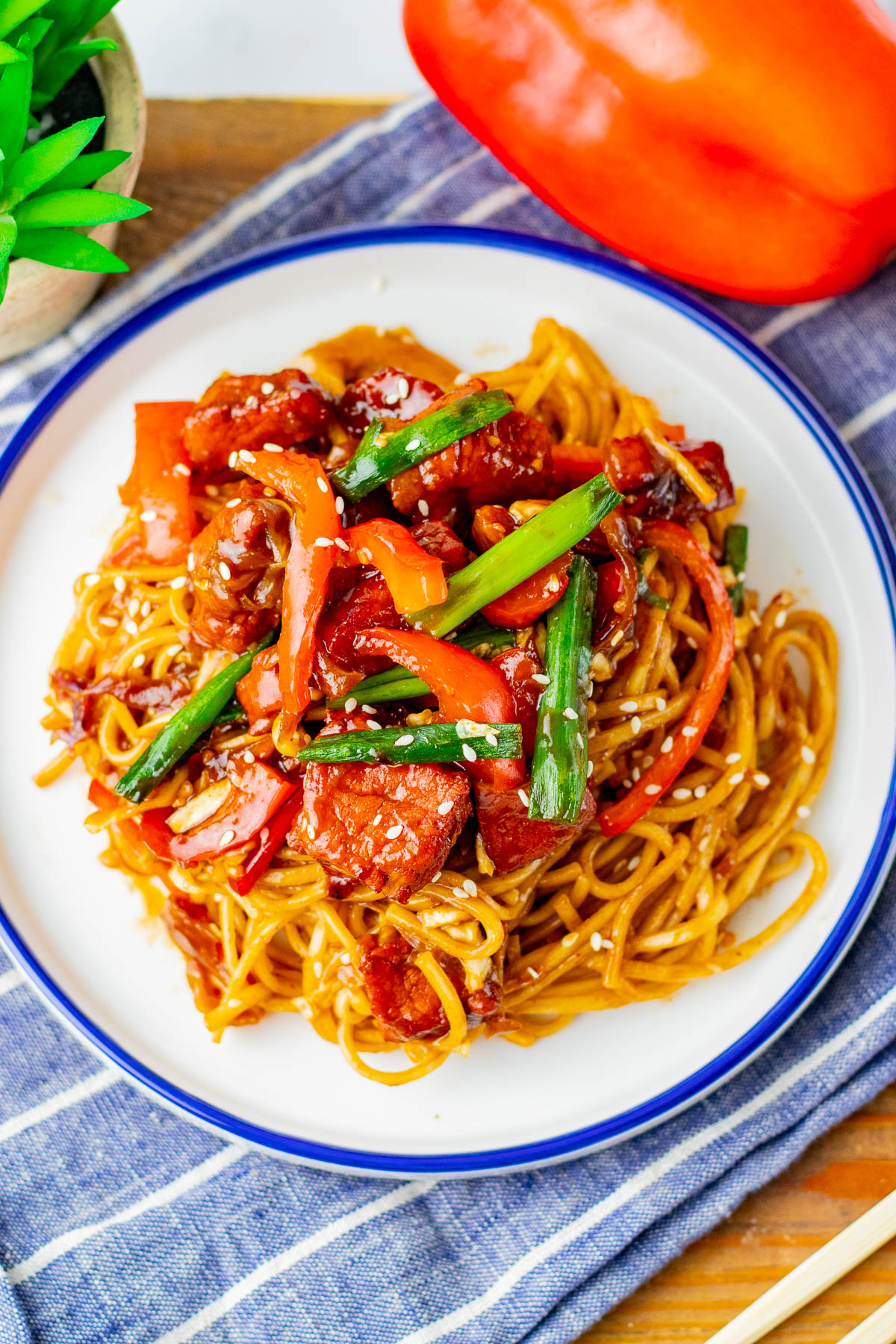
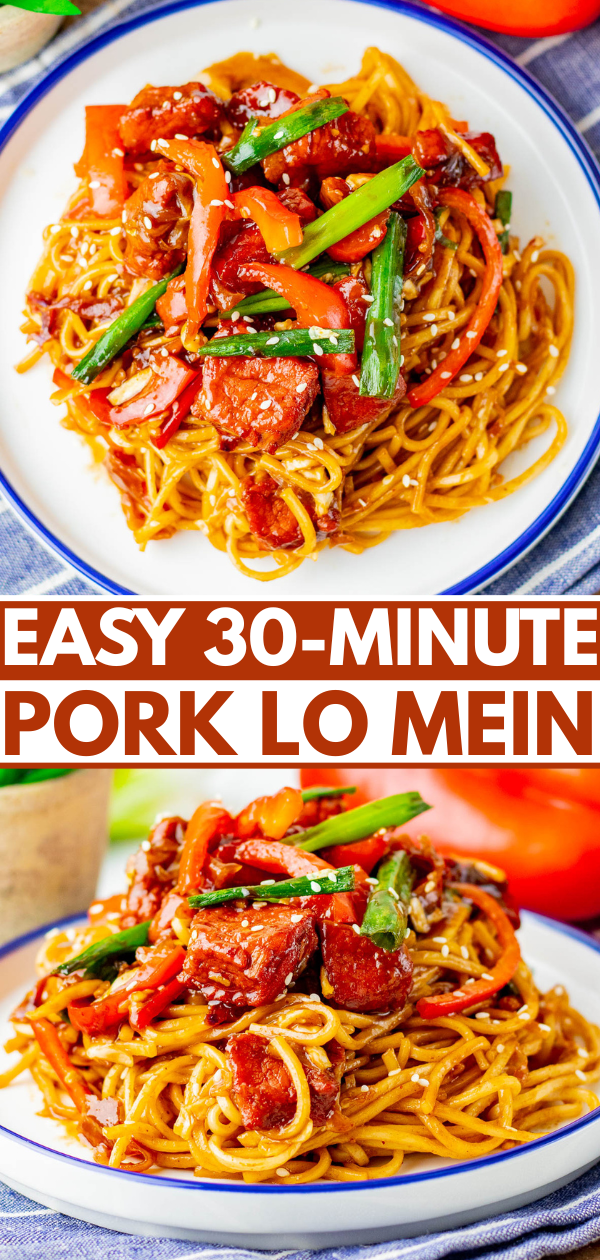
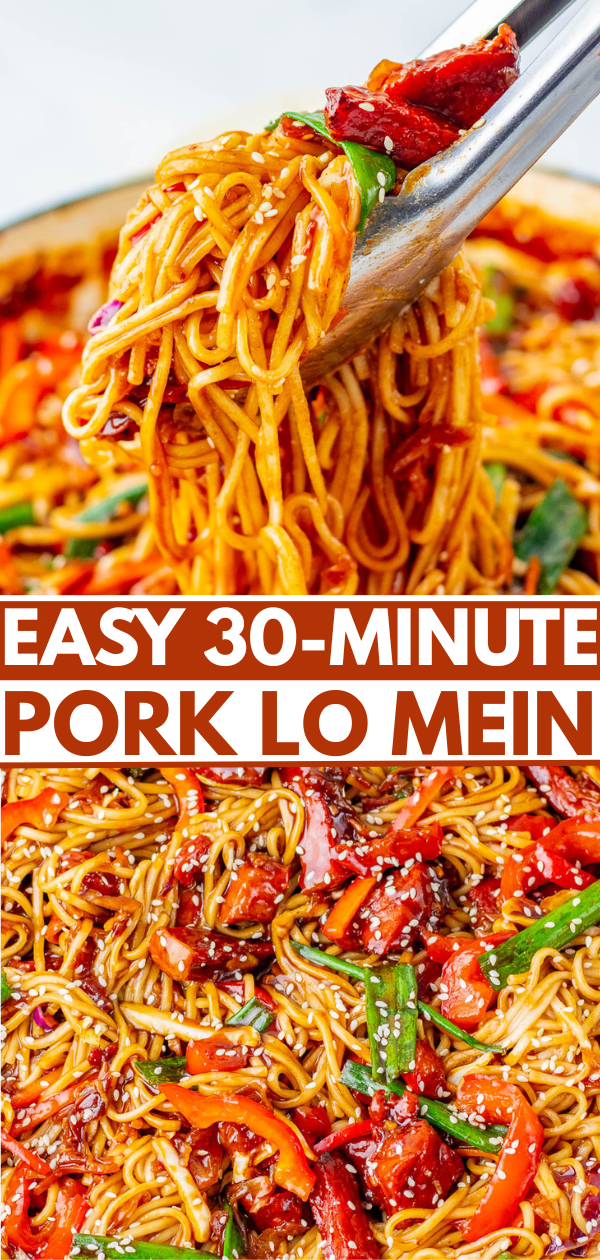
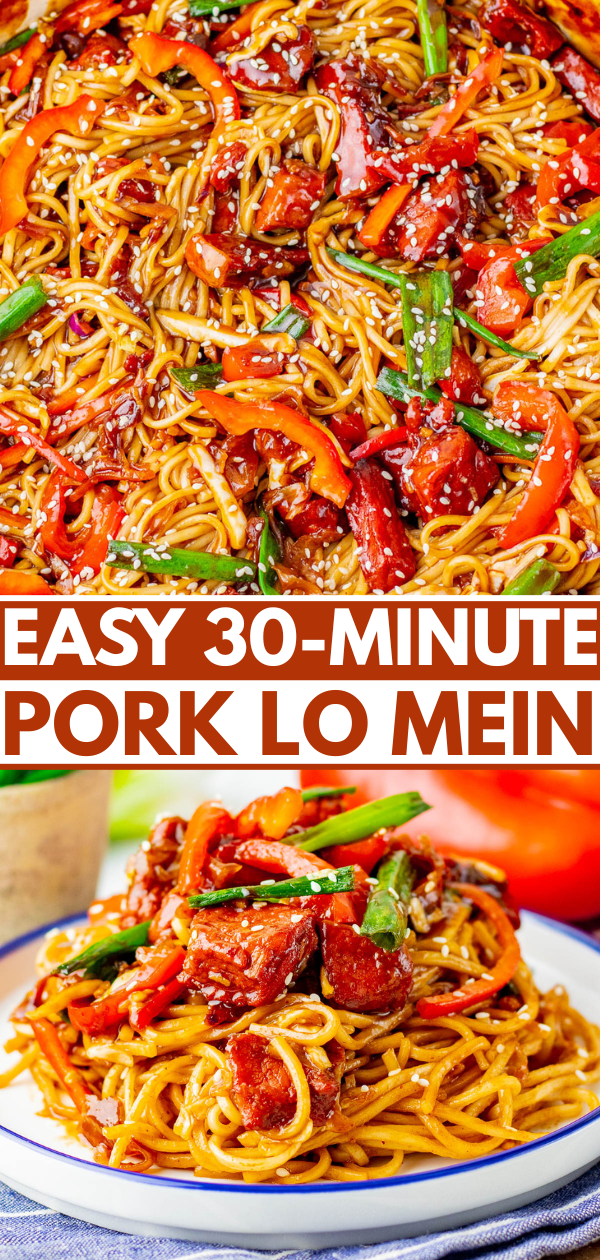
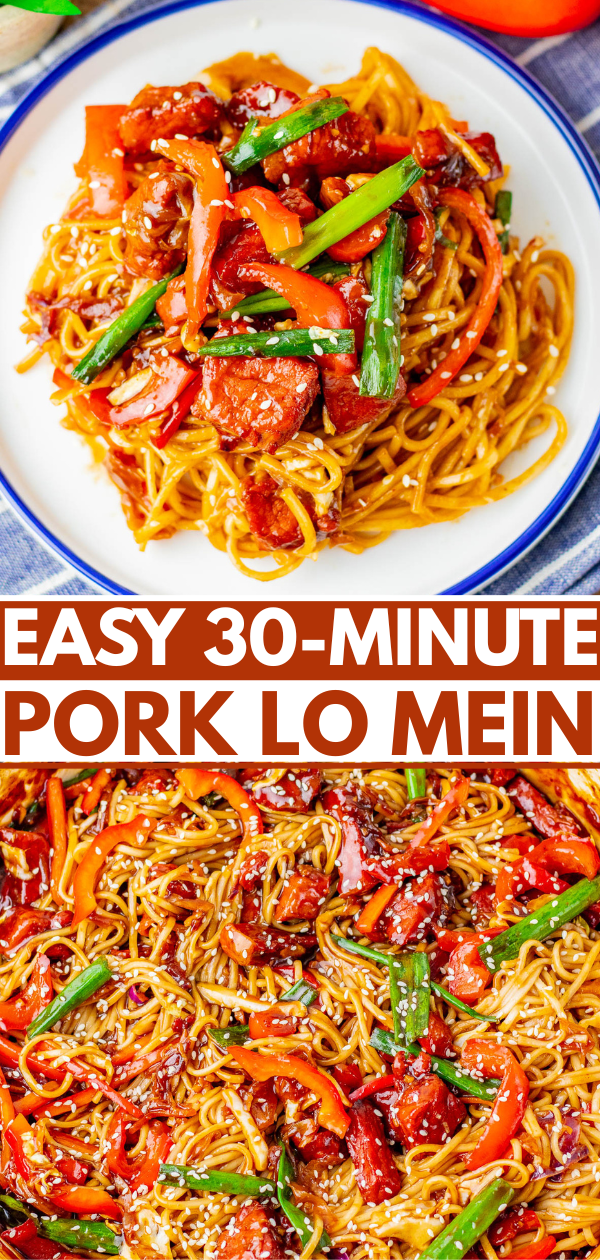
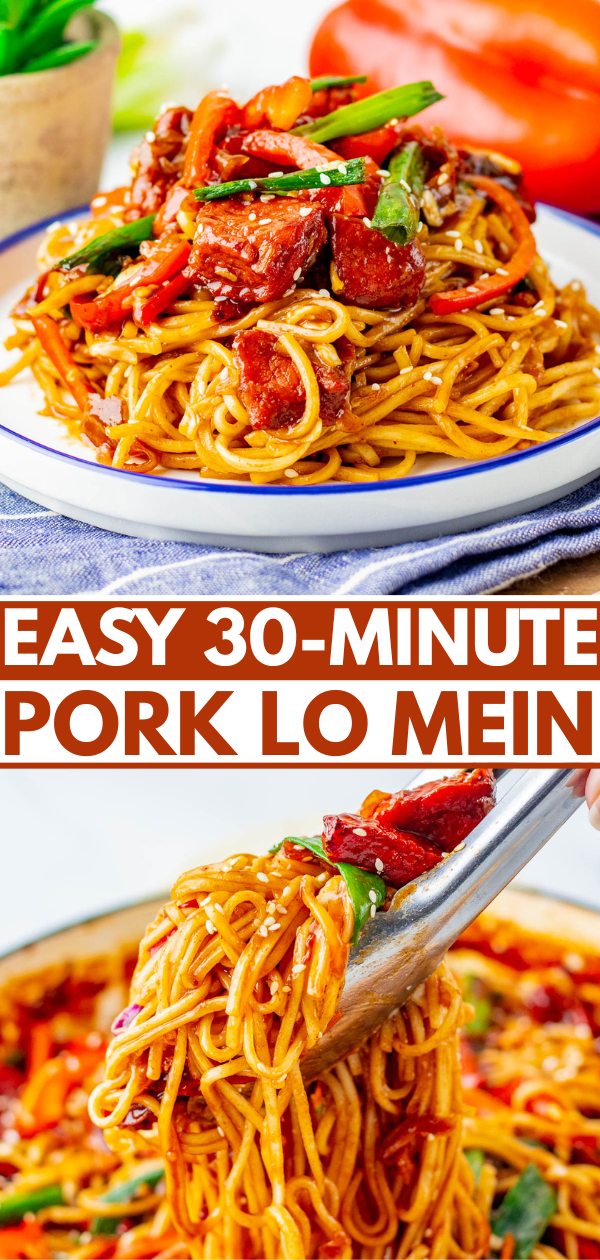
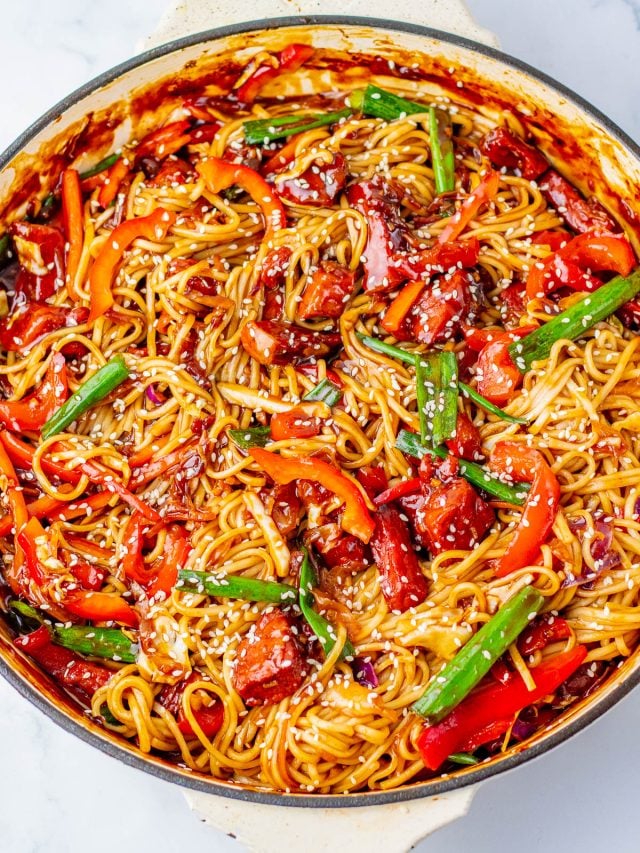
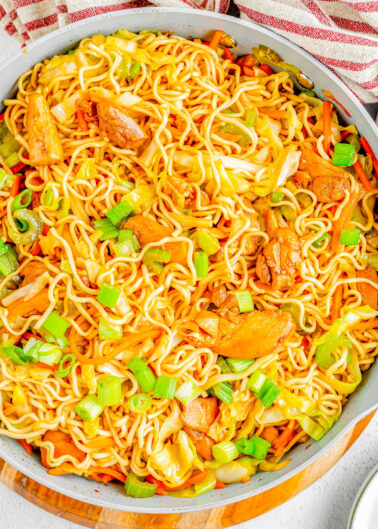
This EASY recipe for Pork Lo Mein 🐷🌶️🥡 includes tender lo mein noodles tossed with red bell peppers, green onions, shredded cabbage, and plenty of juicy pork. Everything is tossed in savory-sweet sauce for maximum better-than-takeout authentic FLAVOR! This homemade recreation of the Chinese classic is ready in 30 minutes, making it perfect for busy weeknights!

Table of Contents
Easy Pork Lo Mein Recipe
- When you’re looking for a simple Chinese-inspired lo mein recipe that’s ready in 30 minutes, this is the one!
- That’s because there’s saucy, savory-yet-sweet pork in every bite of this Chinese noodles recipe. Not a pork fan? Use diced chicken breasts or chicken thighs.
- A mixture of hoisin sauce, soy sauce, ketchup, and brown sugar does the trick to keep the sauce reading more savory with some sweetness, to make sure even the pickiest eaters love it. The lo mein noodles soak up all that saucy goodness!
- To ensure you’re getting some crunch, extra nutrients, and fiber there’s shredded green cabbage, red bell peppers, and green onions.
- Best of all, you don’t need a wok for this simple 30 minute pork lo mein recipe. It’s faster than calling for Chinese takeout.
- Make sure to also check out my recipes for Chicken Chow Mein and Beef Chow Mein. While chow mein is a bit less saucy and uses slightly thinner noodles than lo mein, chances are if you like one, you’ll like them both.
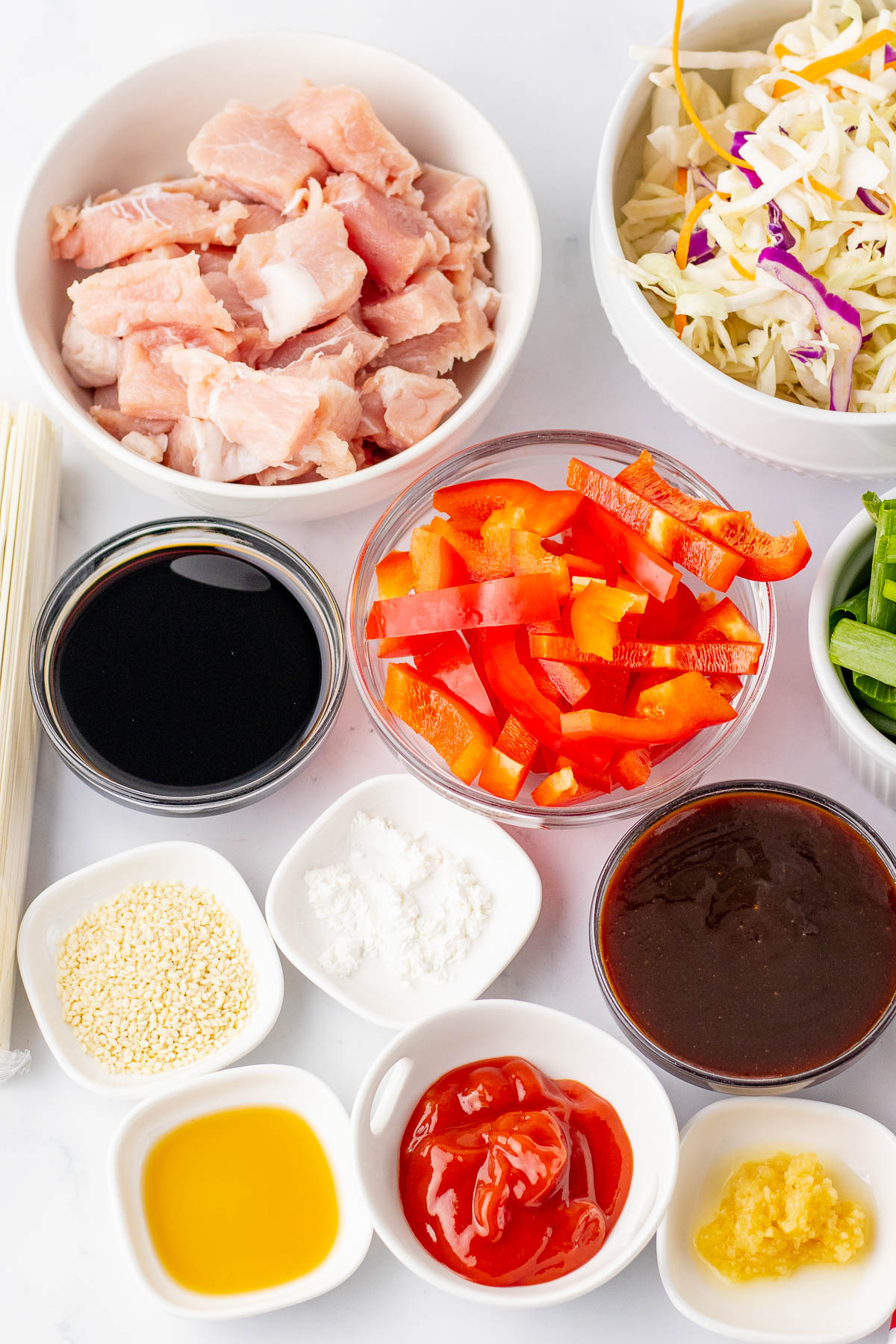
Ingredients in Lo Mein with Pork
- Pork: You can either cube the pork or thinly slice it. See the Tip box below for what kind or cut of pork it best!
- Liquids for the Sauce: Hoisin sauce, reduced sodium soy sauce, brown sugar, optional red food coloring, olive oil or vegetable oil, sesame oil, ketchup, cornstarch. I’ve also tried oyster sauce used in place of some of the soy sauce. If you’re feeling experimental, go for it.
- Veggies: Green cabbage (Napa cabbage) or use a bag of shredded cabbage such as a coleslaw mix to save time; red bell pepper (or your favorite color bell pepper such as orange, yellow, or green), green onions (scallions), garlic cloves. Tip – Add additional vegetables such as shiitake mushrooms, snow peas, carrots, baby corn, water chestnuts, mung bean sprouts, or your favorites, as desired.
- Noodles: Lo mein noodles are wheat based noodles and are a little thicker than chow mein noodles. In a pinch, you can use the noodles that come in a couple packages of ramen. Don’t use egg noodles and it’s up to you if you want to take a chance with spaghetti noodles or angel hair pasta.
- Optional garnishes: Sesame seeds, additional soy sauce, spicy sauce like a chili garlic sauce, etc.
Note: Scroll down to the recipe card section of the post for the ingredients with amounts included and for more complete directions.
What Cut of Pork is Best for Lo Mein?
You can use a variety of cuts of pork based on what your goals are – tender, lean, budget-conscious, etc.
- Pork tenderloin is lean, very tender, and a high quality of meat. If you’re going for the ‘filet mignon’ of pork cuts, go with pork tenderloin. Boneless pork loin, while different that tenderloin, is a close second.
- Pork belly is fatty but fat = big, rich flavor. So depending on what you love, you may want to consider it.
- Boneless pork ribs, boneless pork chops (pork loin chops) are very versatile, and are a good middle-of-the-road option here when you want great flavor, average tenderness, and budget-friendly.
- Pork shoulder, pork butt, and other tougher cuts of pork are not recommended for this stir fry-inspired recipe since they need time to tenderize.
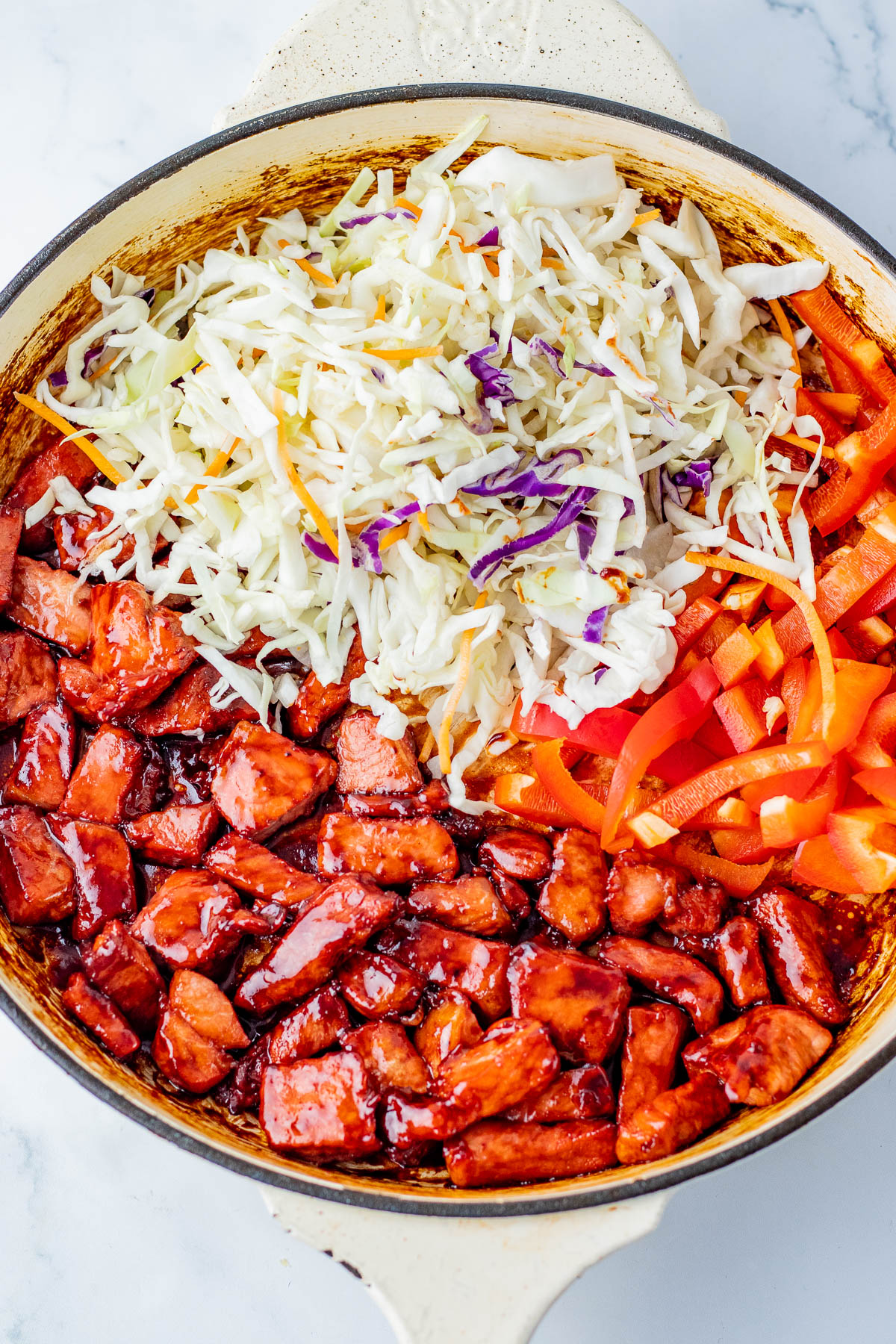
How To Make Chinese Pork Lo Mein Recipe
- Make the sauce by combining 2 tbsp each of hoisin sauce, low-sodium soy sauce, and brown sugar in a medium bowl; the optional food coloring, and whisk. Add the pork, and toss well to combine and coat.
- To a large skillet or pan, add the oils, pork, and cook over medium-high heat for about 3 minutes. Flip and toss frequently.
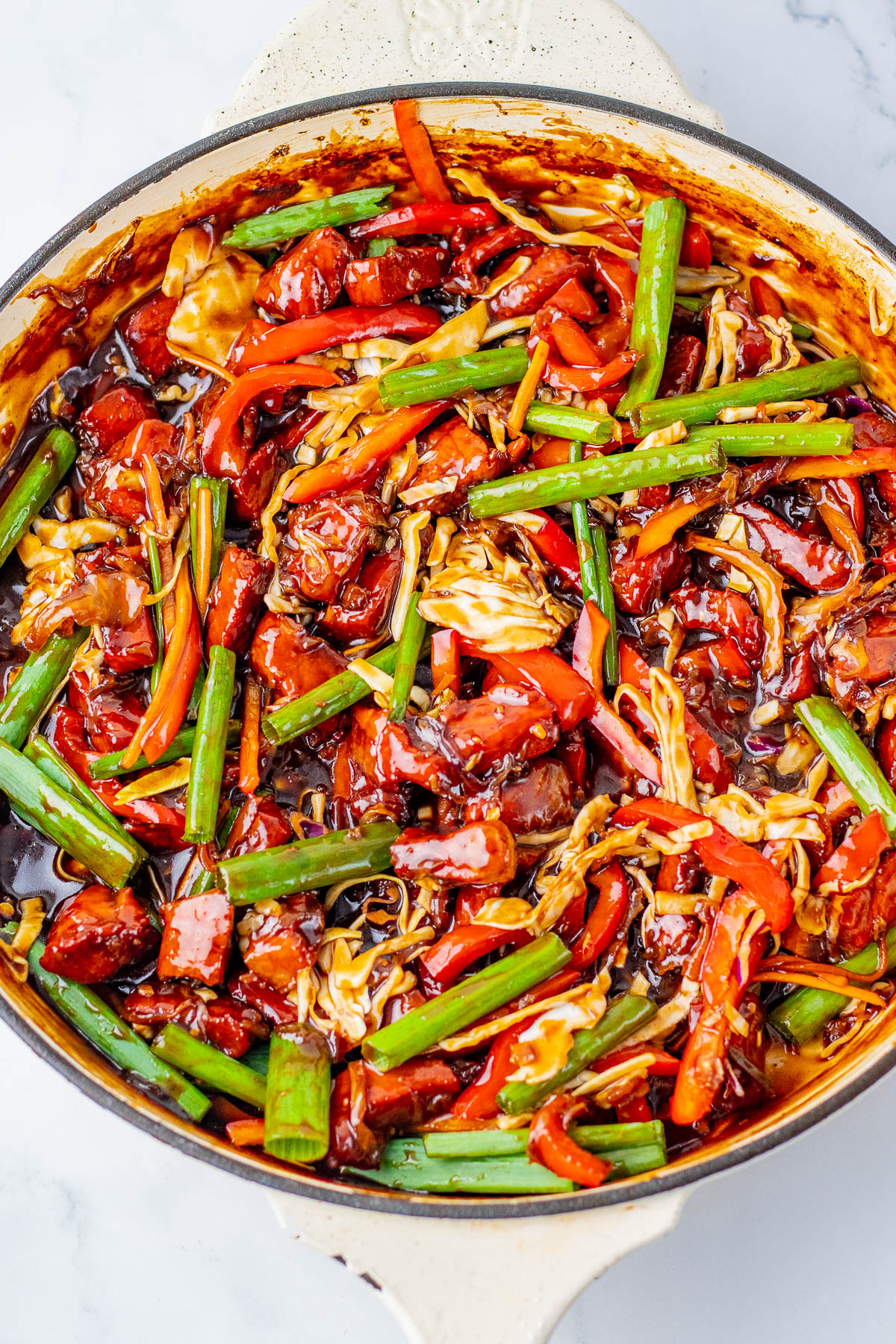
- Add the cabbage, bell peppers, green onions, garlic, and cook for about 5 minutes, or until cabbage has wilted, vegetables are softened, and pork is done. Tip – If you have some fresh ginger on hand, grate a bit in, or use a sprinkle of ground ginger.
- While everything is sauteing, separately boil the lo mein noodles in a large pot according to package instructions, drain, and set aside until the end.
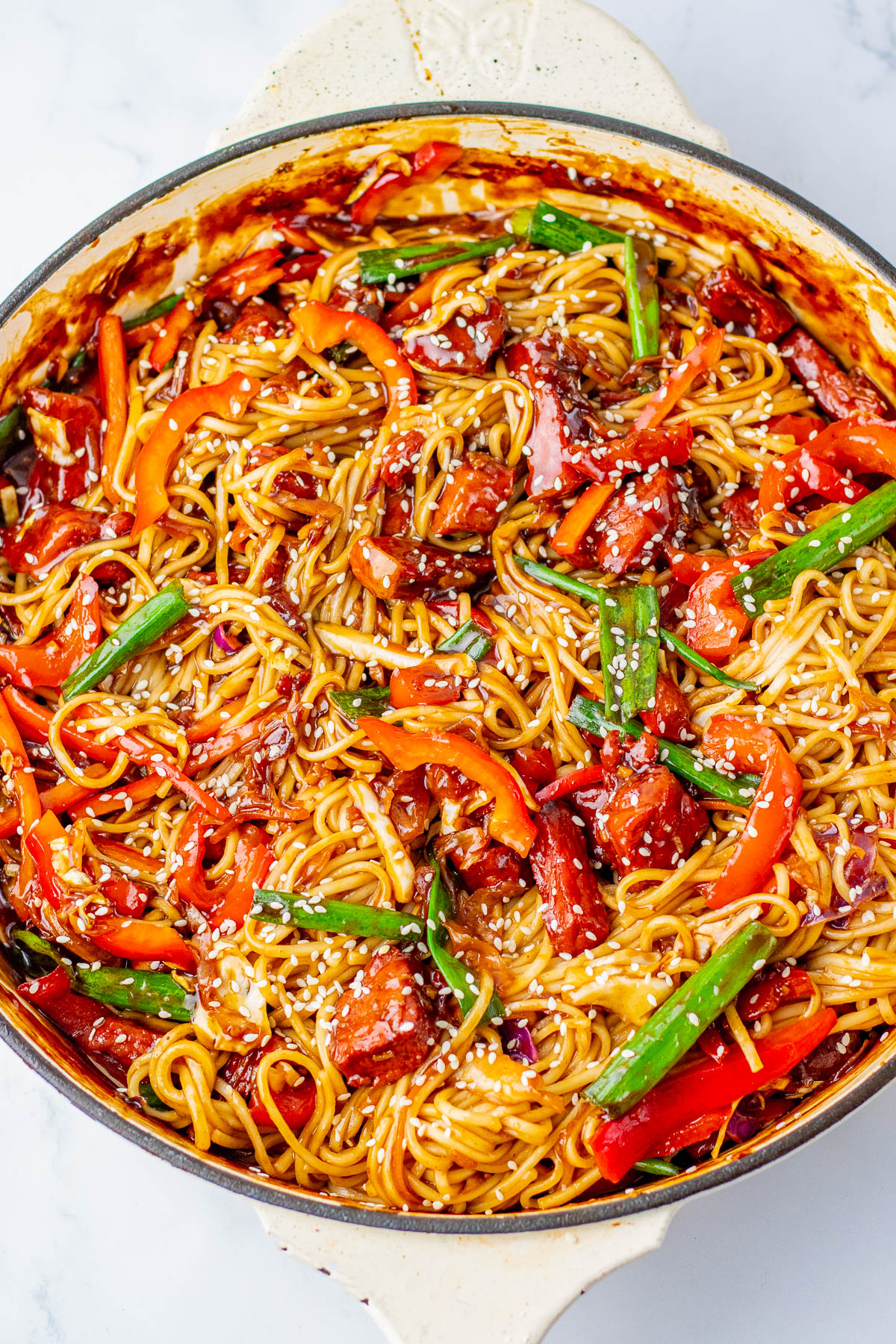
- Pour in the remaining sauces, bring to the sauce mixture to a quick boil, the sauce will thicken from the cornstarch. Add the lo mein noodles, toss to combine and coat evenly, and serve. Optionally, garnish as desired.
what to serve with lo mein




Storage
In the Refrigerator: This recipe will keep in an airtight container in the fridge for up to 5 days.
In the Freezer: This recipe will keep airtight in the freezer for up to 3 months.
To Reheat: I use my microwave for quickness and ease and reheat my leftovers for about 30 seconds on high, or as needed.
Pork Lo Mein
Equipment
Ingredients
- ½ cup hoisin sauce, plus 2 tablespoons, divided
- ⅓ cup reduced sodium soy sauce, plus 1 tablespoon, divided
- 1-2 tablespoons light brown sugar, packed
- Drops red food coloring, optional
- 1 tablespoon olive oil, or as desired (vegetable or canola oil may be substituted)
- 1 tablespoon toasted sesame oil, or as desired
- 1 pound pork, cubed or thinly sliced (see blog post for recommended cuts but pork tenderloin is the most tender, leanest but more expensive; boneless pork chops are good all-around; boneless skinless chicken breasts or thighs may be substituted)
- 2 cups shredded green cabbage, use just the veggie portion and not the sauce from a bag of coleslaw mix as a timesaving shortcut
- 1 large red bell pepper, seeded and sliced into thin strips (or use your favorite color bell pepper)
- 4 green onions, trimmed and sliced into 1-inch segments (I use both green and white parts)
- 2-4 cloves garlic, finely minced
- 2 tablespoons ketchup
- 2 teaspoons cornstarch
- 14 ounces lo mein noodles, cooked according to package directions
- sesame seeds, optional and to taste for garnishing
Instructions
- To a medium/large bowl, add 2 tablespoons hoisin sauce, 1 tablespoon hoisin sauce, 1-2 tablespoons brown sugar*, optionally a few drops of red food coloring, and whisk to combine. Tips – If you do not like much sweetness in savory dishes, stick with 1 tbsp or even 1/2 tbsp of brown sugar*. The hoisin sauce has sugar in it, combined with the brown sugar, so if you're sensitive to sweetness with savory foods, be mindful and adjust to your personal preferences so the dish doesn't finish overly sweet for your tastes. The food coloring gives a classic red roasted pork appearance but is completely optional.
- To a large skillet, add 1 tablespoon of olive oil, 1 tablespoon sesame oil (Tip – If you're very sensitive to the flavor of sesame oil, cut it back to 1 teaspoon and use extra olive or vegetable oil instead to make up the difference), add the pork, the remaining juices/sauce from the bowl, and saute over medium-high heat for 2-3 minutes, flipping and tossing the pork frequently as it cooks to ensure even cooking.
- Add the cabbage, peppers, green onions, garlic, and cook for about 4-5 minutes, or until the cabbage has wilted and the vegetables have softened. Stir very frequently to encourage the cabbage to wilt.In a separate pot, boil the lo mein noodles according to package directions while the vegetables are sauteing – make sure to get these going so they're ready when you need them. Drain well, and set aside until you add them in Step 4 below.
- When the pork is cooked through and the vegetables have softened, add the remaining 1/2 cup hoisin, 1/3 cup soy sauce, ketchup, cornstarch, and stir well to combine and coat evenly. Allow the mixture to come to a quick bubble before adding the noodles and tossing well to combine and coat evenly. Tips – Make sure the noodles are drained well or they will water everything down. If things are a little too wet/liquidy after you add them, allow the skillet to simmer over medium heat for an extra minute or two, and the liquid will evaporate. Additionally, noodles in general absorb excess liquid as time passes.
- Taste and make any necessary flavor adjustments. Flavor Tips – I add about 1 teaspoon each of salt and black pepper. I also add about 1/2 to 1 teaspoon red pepper flakes for a bit of heat or a pinch of cayenne pepper. Chili garlic sauce, chili crunch or chili flakes are good for heat. You can also add additional soy sauce or hoisin sauce, as desired. Everyone's noodles, pork, and personal preferences vary, so adjust to taste.
- Optionally garnish with sesame seeds and serve.
Notes
Nutrition
Nutrition information is automatically calculated, so should only be used as an approximation.
©averiecooks.com. Content and photographs are copyright protected. Sharing of this recipe is both encouraged and appreciated. Copying and/or pasting full recipes to any social media is strictly prohibited.




Thanks for sharing all of your news…lots of things going on for you. You will be a great mom and get ready for your schedule to go through some changes! Best wishes going forward, and thanks for the wonderful recipes you share with us.
Thanks for nice comment, Pat, and I appreciate your kind sentiments. I am glad you enjoy my recipes and I appreciate your support!
What do you do with the sauce in the first paragraph? Is the pork marinated in it? The recipe doesn’t specify.
In Step 2 I wrote the following: “To a large skillet, add 1 tablespoon of olive oil, 1 tablespoon sesame oil (Tip – If you’re very sensitive to the flavor of sesame oil, cut it back to 1 teaspoon and use extra olive or vegetable oil instead to make up the difference), add the pork, the remaining juices/sauce from the bowl, and saute over medium-high heat for 2-3 minutes, flipping and tossing the pork frequently as it cooks to ensure even cooking.”
So to your question, you would “add the pork, the remaining juices/sauce from the bowl” to the skillet and saute. Enjoy!
You never say to put the pork into the sauce that you’ve just made. Is the sauce a marinade? What do you mean by ” the remaining juices/sauce from the bowl”? Is that after you’ve marinated the pork and put it in the skillet? I’m sorry, it’s just not clear to me.
Yes, all the marinating liquid (sauce, juice, liquid – whatever you want to refer to it as) add it to the skillet. Just dump the whole bowl with the pork and marinating liquid into the skillet.