
Learn how to make restaurant-worthy 🥥🍚 Coconut Rice at home the EASY way in just 30 minutes! With only a handful of simple ingredients you’ll enjoy coconut rice that’s creamy, fluffy, and the PERFECT side dish that compliments so many recipes!

Easy Coconut Rice Recipe
- Cooking coconut rice at home is so simple yet it can be so elusive for how to get just the right consistency, texture, and balance the natural sweetness of coconut milk.
- That’s why I’m sharing my foolproof easy coconut recipe recipe that rivals any coconut rice you’d get in an Asian or Indian restaurant! Better-than-takeout recipes are my specialty.
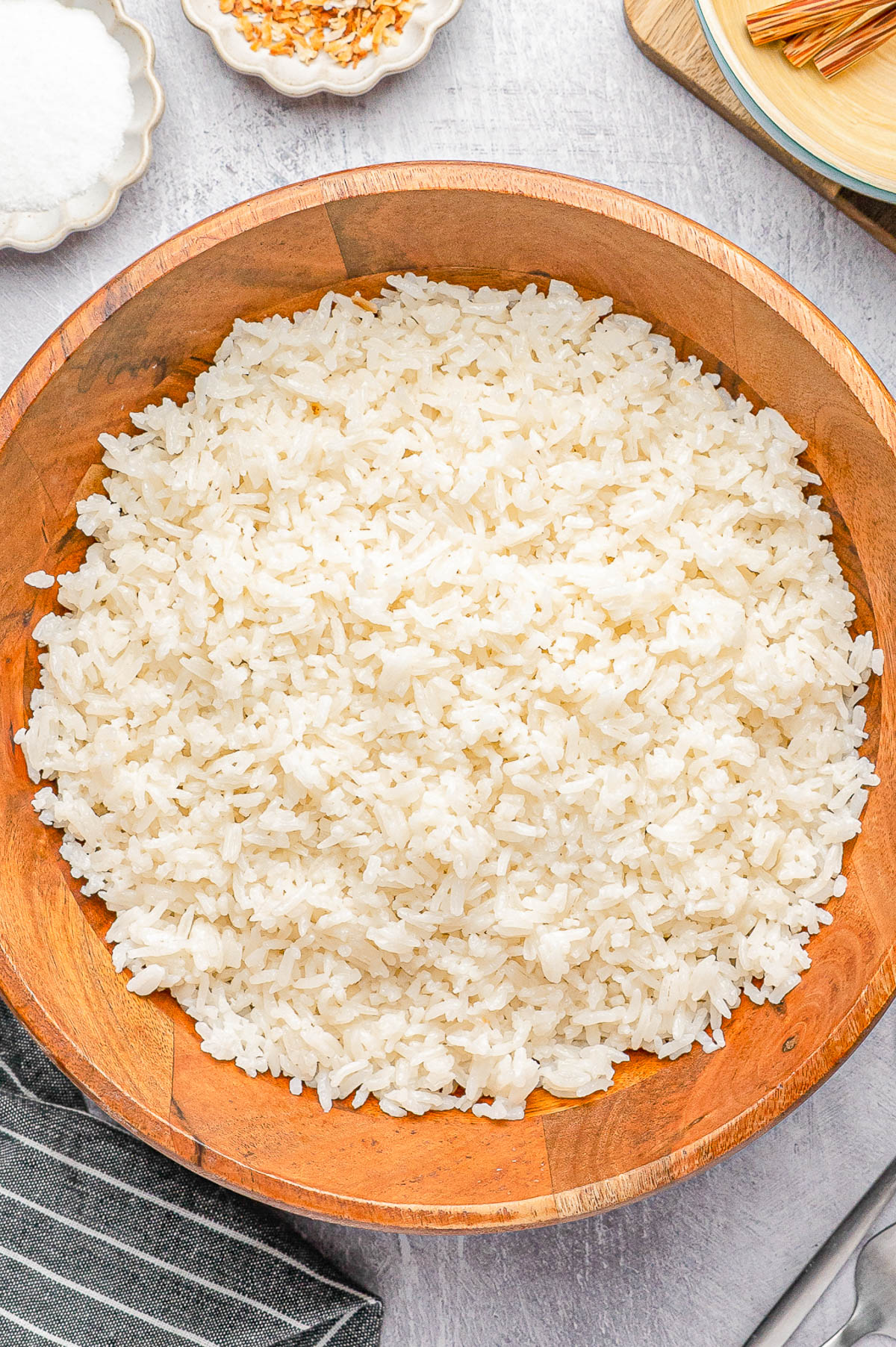
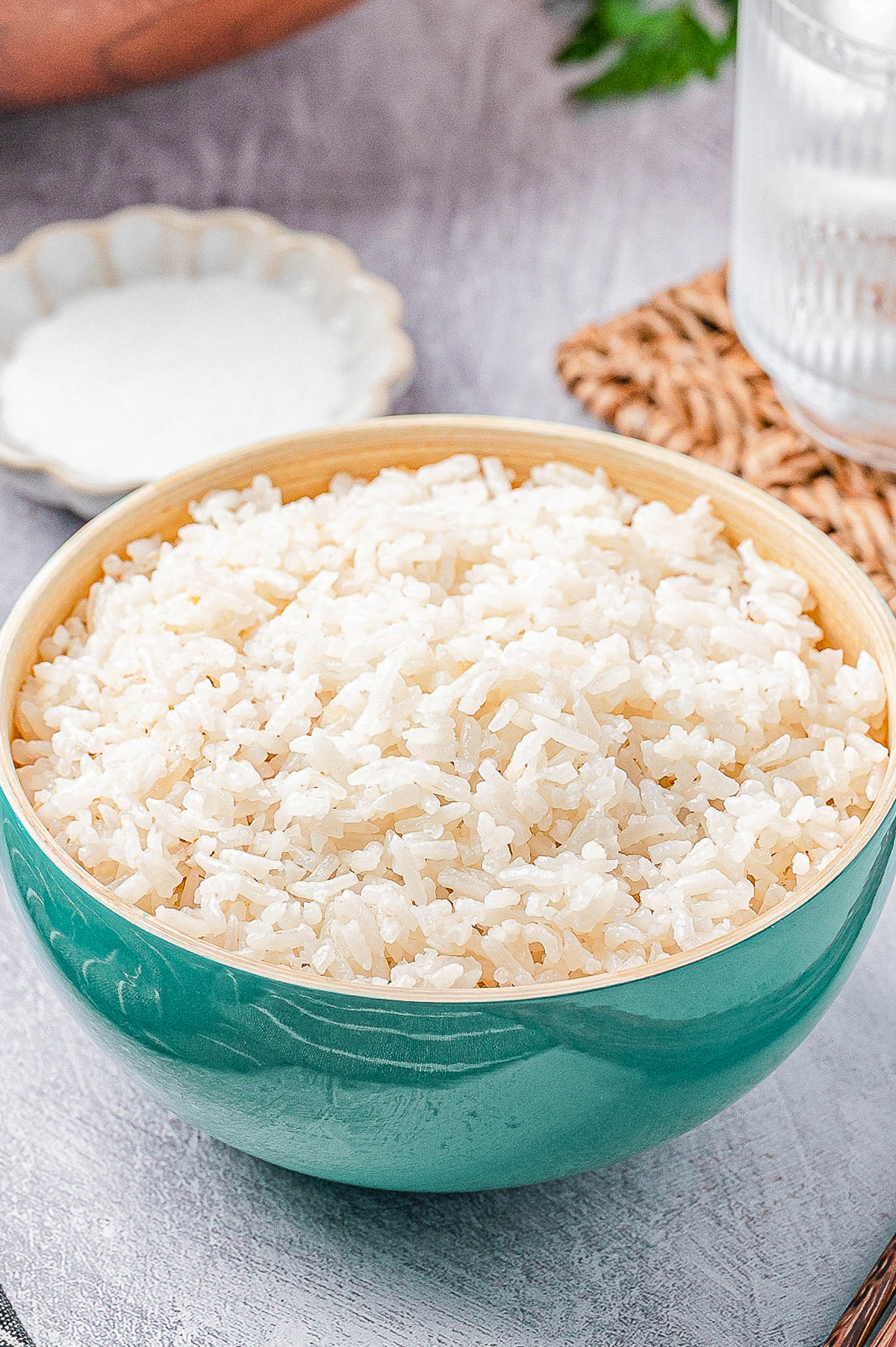
- This stovetop coconut rice has a fluffy texture, the perfect texture balance between not sticky or gloppy but also not soggy and dripping in coconut milk. I use just a teaspoon of sugar which I love because it plays into the natural sweetness from coconut milk.
- Naturally vegan, gluten-free, and the perfect side side for so many dishes and cuisines including my fan favorite Thai Chicken Coconut Curry, Indian Butter Chicken, and Garlic Butter Chicken.


Simple Ingredients for Fluffy Coconut Rice
You can make substitutions based on what your goals are, and I give options below:
- Rice – The star of the show! I only use jasmine rice for coconut rice. Long grain white rice or basmati rice may be substituted if you add ~1/4 cup of water. If you want to use brown rice, you’ll need to add about ~1/2 to 1 cup additional water since brown rice requires much more liquid to soften it. My takeaway: Use jasmine rice.
- Coconut oil – Technically optional, but I use 1 tablespoon to coat the rice and help it from sticking and to seal in extra flavor. If not using coconut oil, consider another oil such as avocado oil, olive oil, or butter.
- Coconut milk – The ideal is one 13.5 to 15-ounce can of unsweetened full fat coconut milk. Lite coconut milk in a can can be substituted but the rice won’t be as creamy, flavorful, and won’t be as good as what you get in a restaurant. You better believe they’re using full-fat! I do not recommend cream of coconut or coconut cream; both are very thick and can be very sweet depending on what exactly you’re working with. Save them for pina coladas. Coconut milk in a carton isn’t thick enough. My takeaway: Use a full-fat can of coconut milk.
- Water or broth – I’ve seen recipes that use a 1:1 ratio of rice:coconut milk but for me, it’s a bit intense. Almost too much coconut flavor. So I like to use a cup of water or reduced-sodium vegetable broth in addition to the coconut milk.
- Salt and sugar – Both bring out the best in this easy coconut rice recipe. The salt is obligatory and the sugar is more optional, but you can omit or reduce it if you really want to.
Note: Scroll down to the recipe card section of the post for the ingredients with amounts included and for more complete directions.


How To Make Coconut Rice on the Stovetop
- Rinse the rice in a colander or fine mesh strainer for a minute or two under cold water to remove excess starch. This helps the coconut rice cook up fluffier.
- Melt the coconut oil in a large saucepan on the stovetop, add the rice, and stir to coat.
- Add the coconut milk, water or broth, sugar, salt, bring to a boil, cover, and simmer for 15 minutes.
- Turn off the heat and allow the rice to remain covered for an additional 10 minutes to finish steaming the rice, or until the liquid has been absorbed.
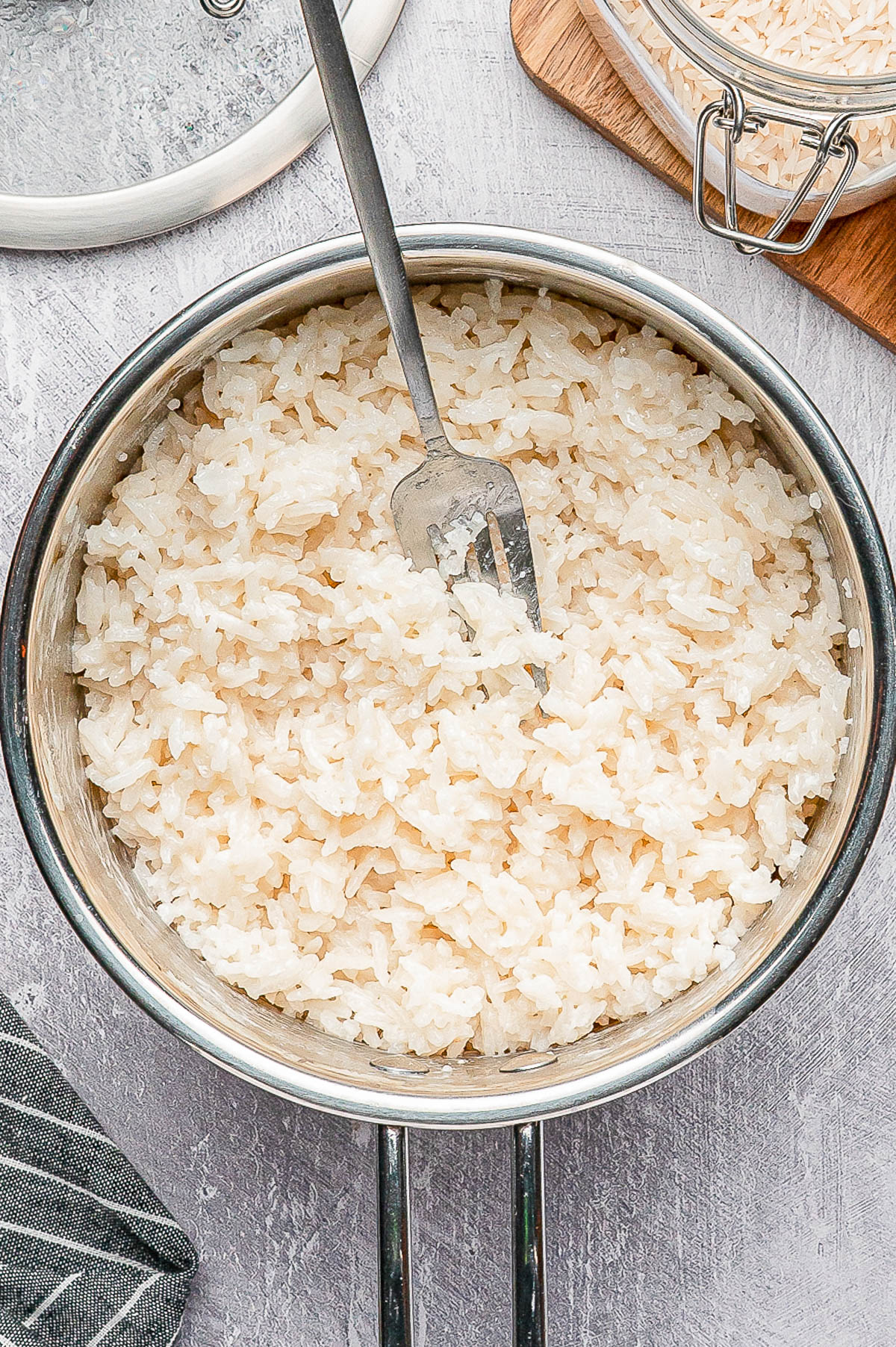
- Uncover, fluff with a fork, and garnish with fresh herbs (cilantro, basil, or your favorites) toasted coconut, lime juice or lime zest, diced nuts and more.
Note: Scroll down to the recipe card section of the post for step-by-step photos and process shots of the cooking process.
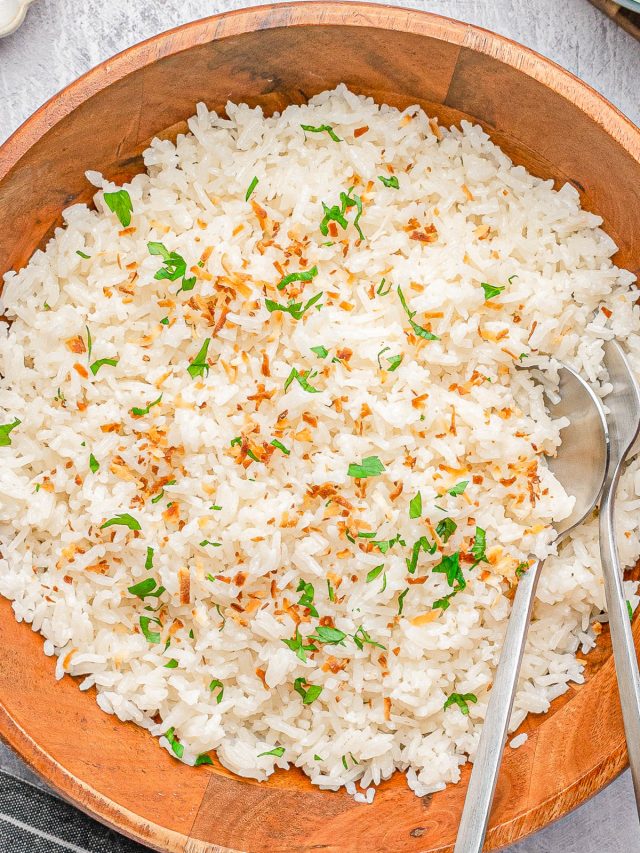
Coconut Rice
Equipment
Ingredients
- 1½ cups jasmine rice, I strongly recommend using jasmine rice and not substituting; read blog post Ingredients section about adding extra liquid for various other types of rice
- 1 tablespoon coconut oil, optional but recommended (may sub with olive oil, vegetable oil, canola oil, avocado oil, or unsalted butter)
- 13.5 ounce can coconut milk, full fat (I strongly recommend using full fat coconut milk in a can, ranging from 13 to 15 ounces rather than lite coconut milk; do not use coconut cream or cream of coconut because they’re too thick and too sweet)
- 1 cup water, (or use reduced sodium vegetable broth for more depth of savory flavor)
- 1 tablespoon granulated sugar, or to taste
- 1 teaspoon salt, or to taste
- Optional garnishes: Toasted shredded coconut, finely minced fresh cilantro or parsley, chopped peanuts or cashews, etc., to taste
Instructions
- To a colander, add the uncooked rice, and rinse it under cold running water for a minute or two, or until the water mostly runs clear. By rinsing off the surface starch, the rice will cook up with a nicer fluffier texture. Set aside momentarily.
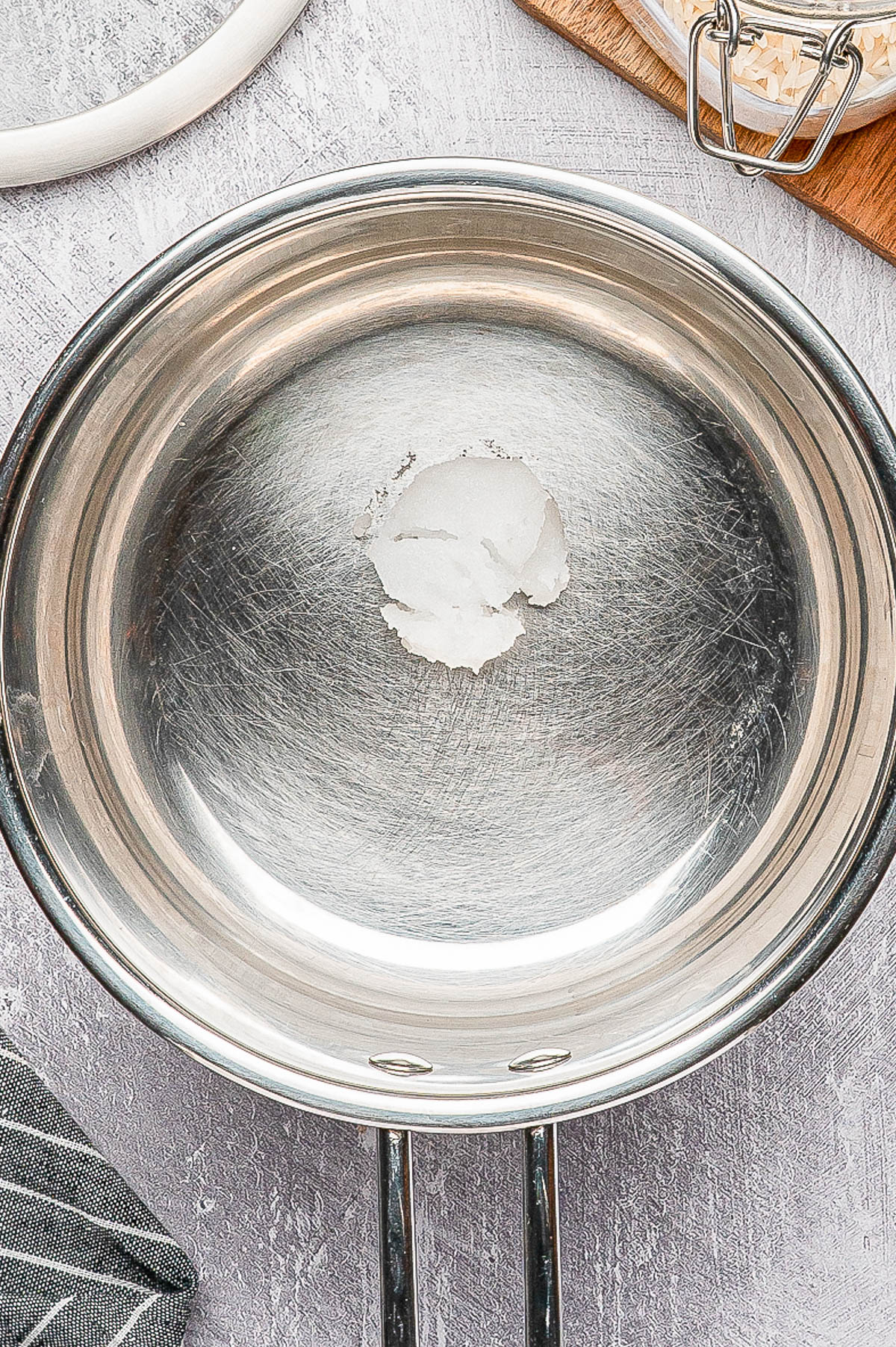
- To a large high-sided saucepan, add the coconut oil, and heat over medium-high heat to melt it.

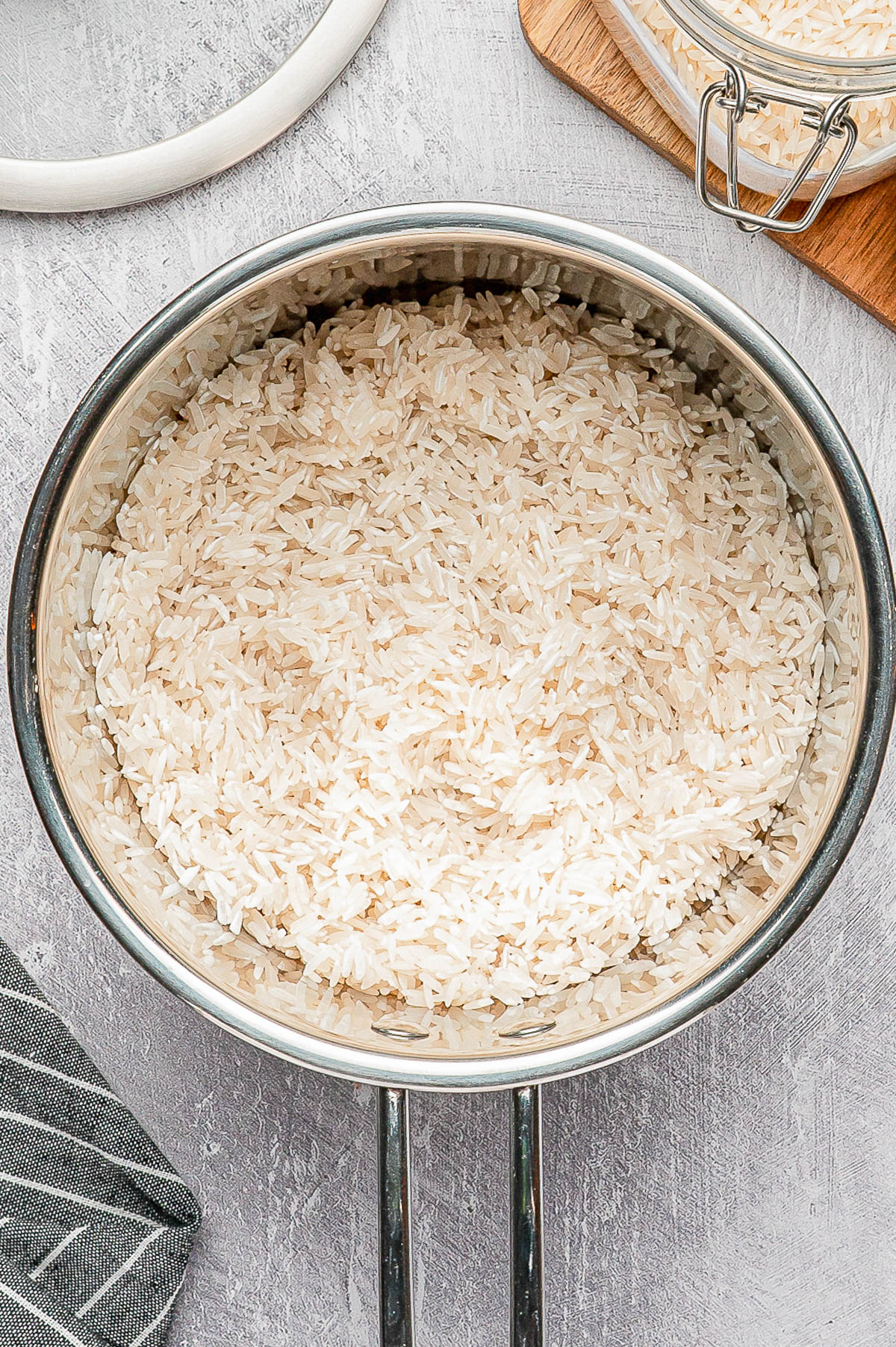
- Add the rice and stir the rice so it's evenly coated in the oil.
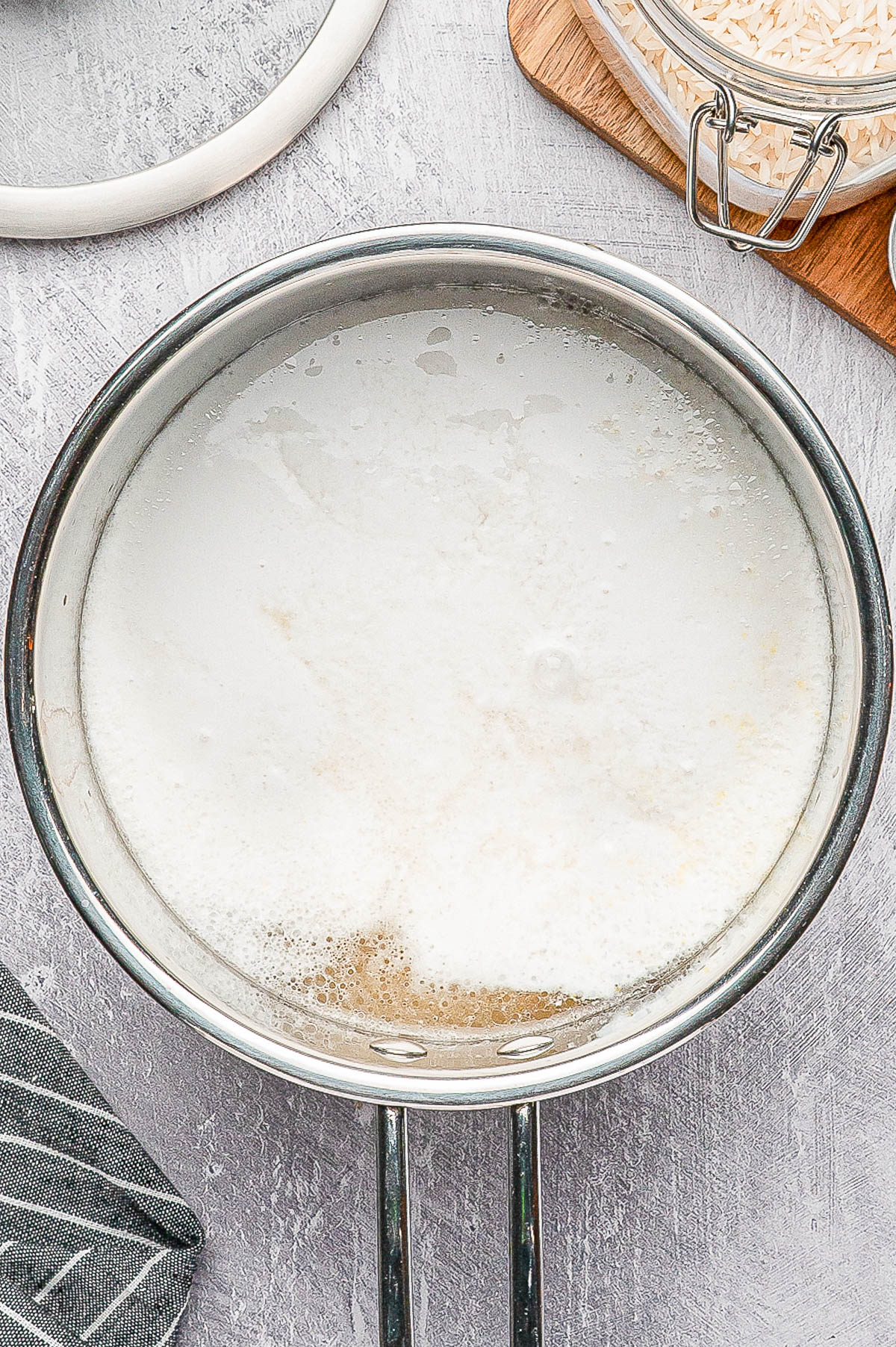
- Add the coconut milk, water or broth, sugar, salt, stir to combine, and bring to a gentle boil. Once boiling, cover with a lid, turn the heat to low, and allow the rice to simmer covered for 15 minutes.
- After 15 minutes, turn the heat off and allow the rice to remain covered for 10 minutes and then remove the lid and fluff rice with a fork. Tips – This 10 minute resting period allows the rice to finish steaming which tenderizes it, and to allow all the liquid to be absorbed. Make sure you do fluff after resting because not doing so may cause some gumminess.
- Too Wet/Soupy? – If after 10 minutes, all the liquid isn't absorbed and it's soupier than you want, turn the heat back on for a minute or two, and allow it to come to a simmer which will help some of the excess liquid steam off. I don't expect this to be a problem but it's easily solved. Keep in mind, rice will continue to absorb liquid as it rests so what appears a bit loose in the pot will always tighten up as time passes.Too Dry? – If you like rice to have a looser texture and be more brothy, you can add a couple tablespoons more of coconut milk, water, or broth, until desired consistency has been reached. Too Hard? – Coconut rice can be finicky depending on your stove and pot. If it’s still a little firm after resting off of the heat, add a few tablespoons of water, cover, and let it steam on low heat for about 5 minutes to finish cooking evenly.Stove issues? – If the low setting on your stove is actually too low to keep the steam going, this could result in either too soupy or too hard rice issue at the end. Pot/Lid issues? If your pot doesn’t seal super tightly, the rice will need extra cook time and/or more liquid. Make sure the lid you use seals properly.
- Taste the rice and if desired, add additional sugar or salt to taste, and optionally garnish with your favorite garnishes and serve.
Notes
Nutrition
Nutrition information is automatically calculated, so should only be used as an approximation.
©averiecooks.com. Content and photographs are copyright protected. Sharing of this recipe is both encouraged and appreciated. Copying and/or pasting full recipes to any social media is strictly prohibited.


Favorite Easy Rice recipes







Followed directions exactly as shown, rice did not cook all the way through, was gummy yet crunchy, allowed to cook a bit more…. After a long while, waiting, letting it sit, etc…. We just ate it. It was ok. May have been my error, not sure.
I always wish I had a glass pot for this type of recipe :(
Hi Angie, I read your comment and I consulted one of my friends who happens to cook a lot of rice, and we came up with the following info which I also popped into the directions in step 6. Some of it was previously there, but I added to it. In your case, the final three items could be at play. That your low setting on your stove was just a bit TOO low to actually properly cook the rice. There’s also not a great risk of harm while it’s simmering to give it a quick check and if you can see it’s not really simmering (or just barely), you can increase the heat a bit – no need for a glass pot. Just lift the lid. And that’s the other issue, that the lid you used securely fits the pot. It’s hard to troubleshoot things like this from afar but hopefully some of this helps. Also if you didn’t fluff it after resting that will cause some gumminess as well.
Too Wet/Soupy? – If after 10 minutes, all the liquid isn’t absorbed and it’s soupier than you want, turn the heat back on for a minute or two, and allow it to come to a simmer which will help some of the excess liquid steam off. I don’t expect this to be a problem but it’s easily solved. Keep in mind, rice will continue to absorb liquid as it rests so what appears a bit loose in the pot will always tighten up as time passes.
Too Dry? – If you like rice to have a looser texture and be more brothy, you can add a couple tablespoons more of coconut milk, water, or broth, until desired consistency has been reached.
Too Hard? – Coconut rice can be finicky depending on your stove and pot. If it’s still a little firm after resting off of the heat, add a few tablespoons of water, cover, and let it steam on low heat for about 5 minutes to finish cooking evenly.
Stove issues? – If the low setting on your stove is actually too low to keep the steam going, this could result in either too soupy or too hard rice issue at the end.
Pot/Lid issues? If your pot doesn’t seal super tightly, the rice will need extra cook time and/or more liquid. Make sure the lid you use seals properly.