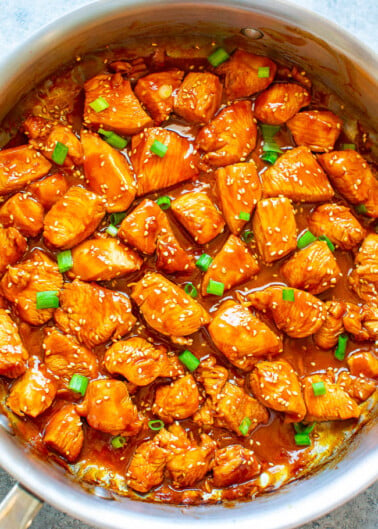
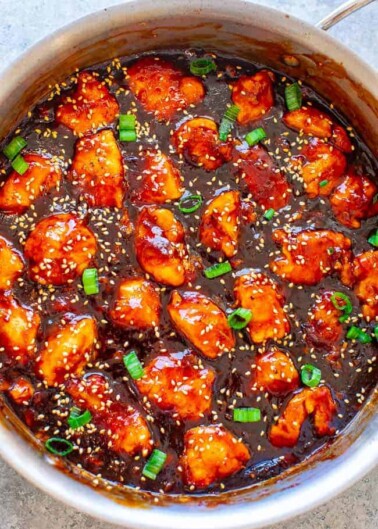
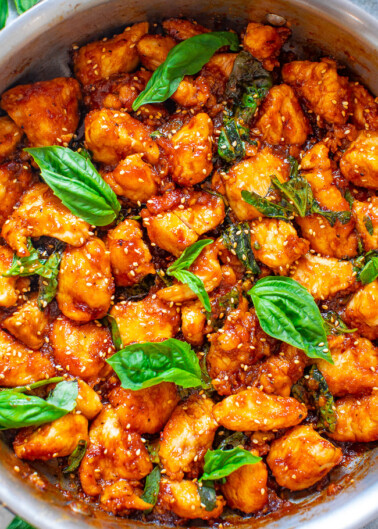
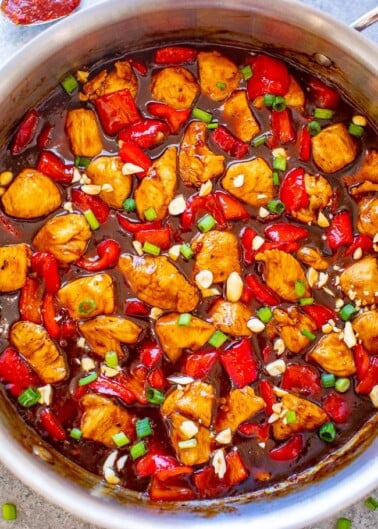
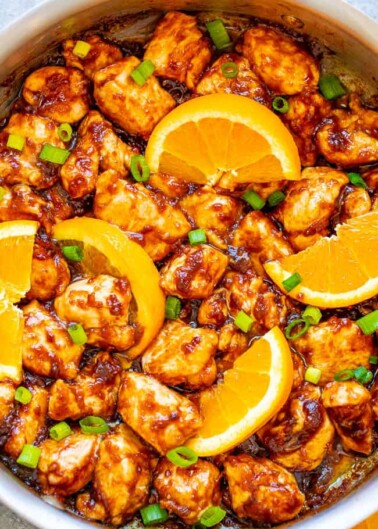
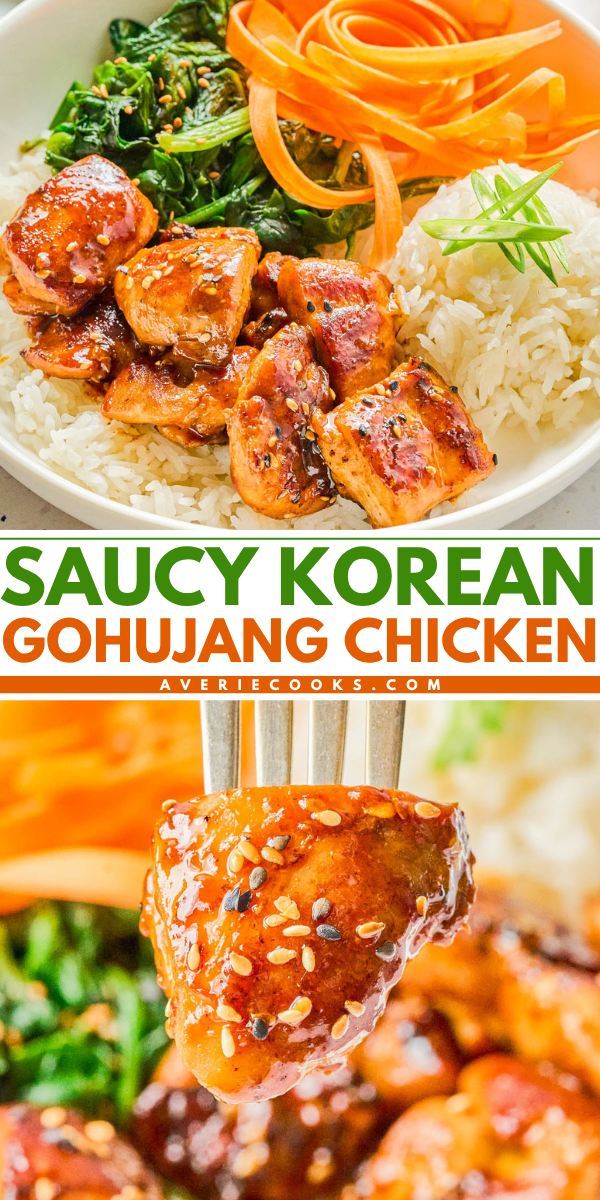
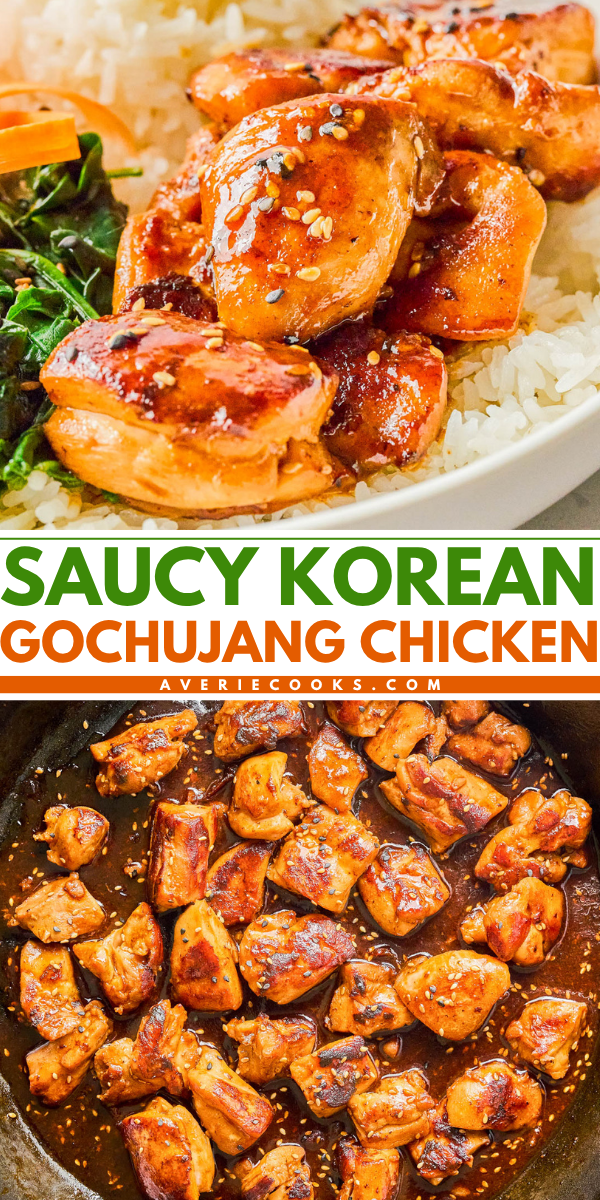
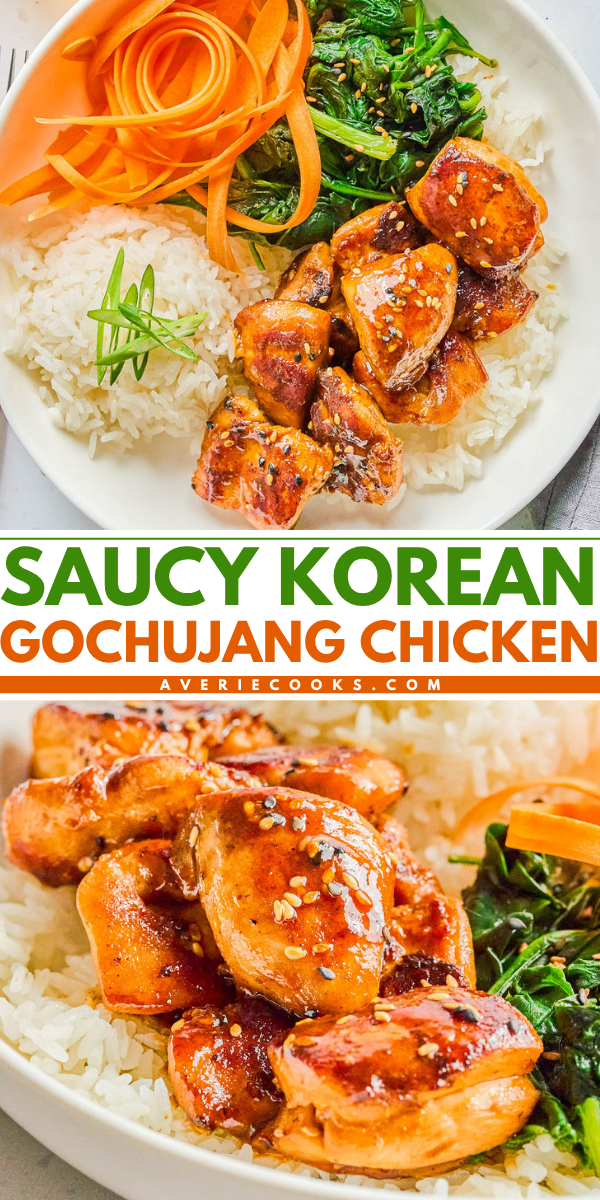
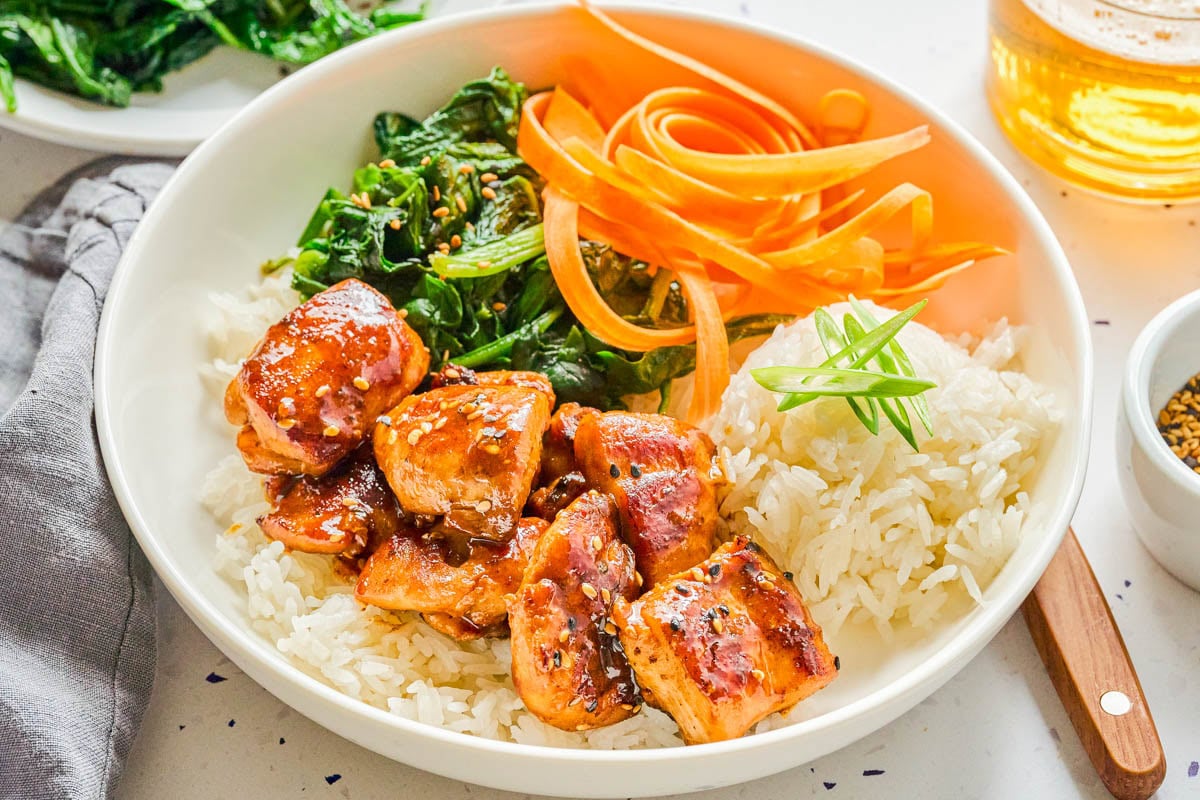
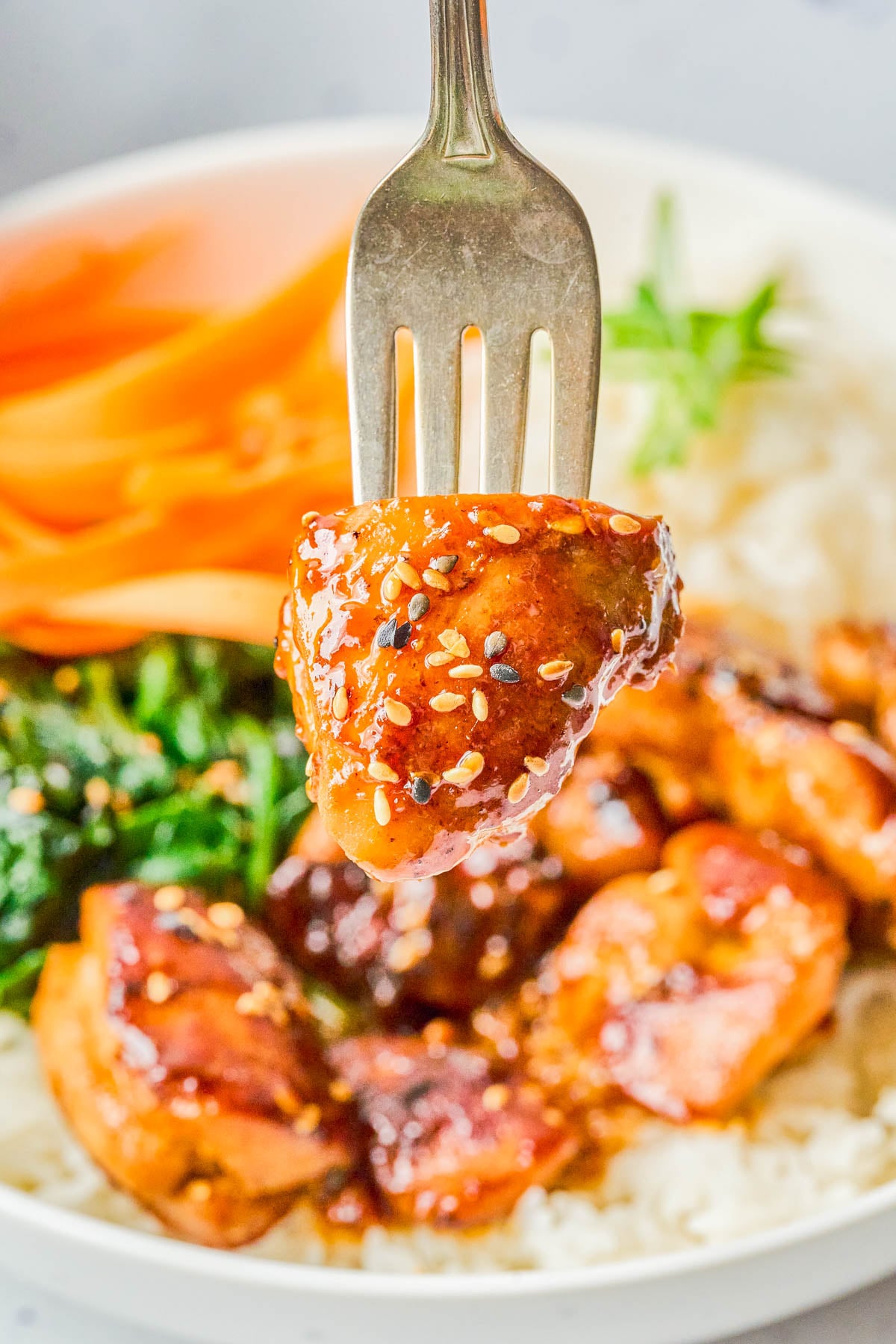
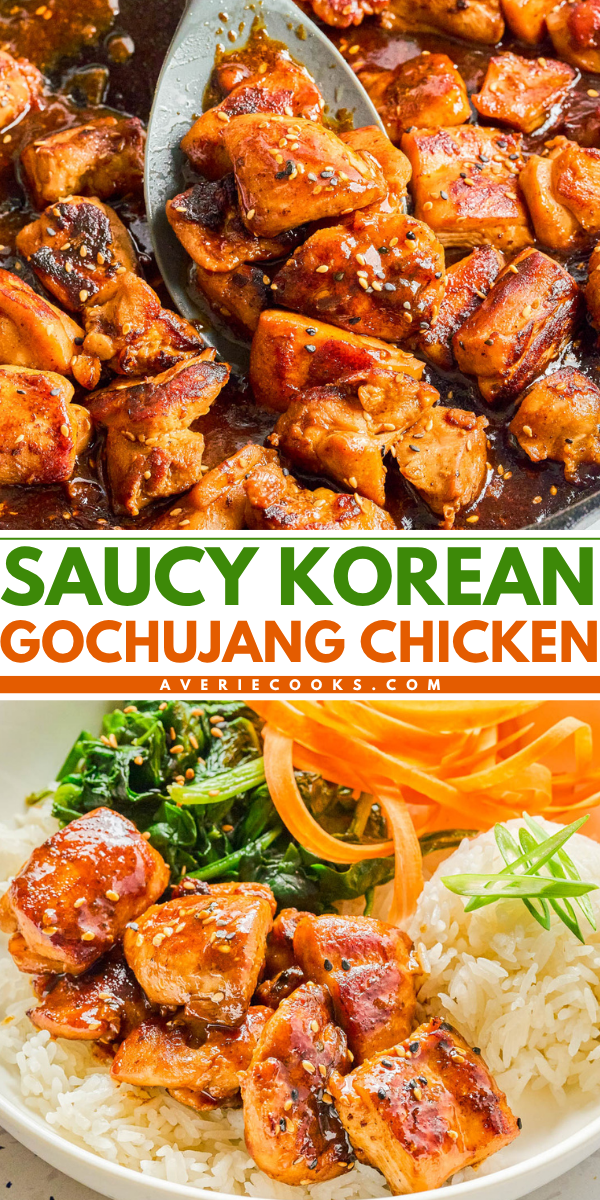
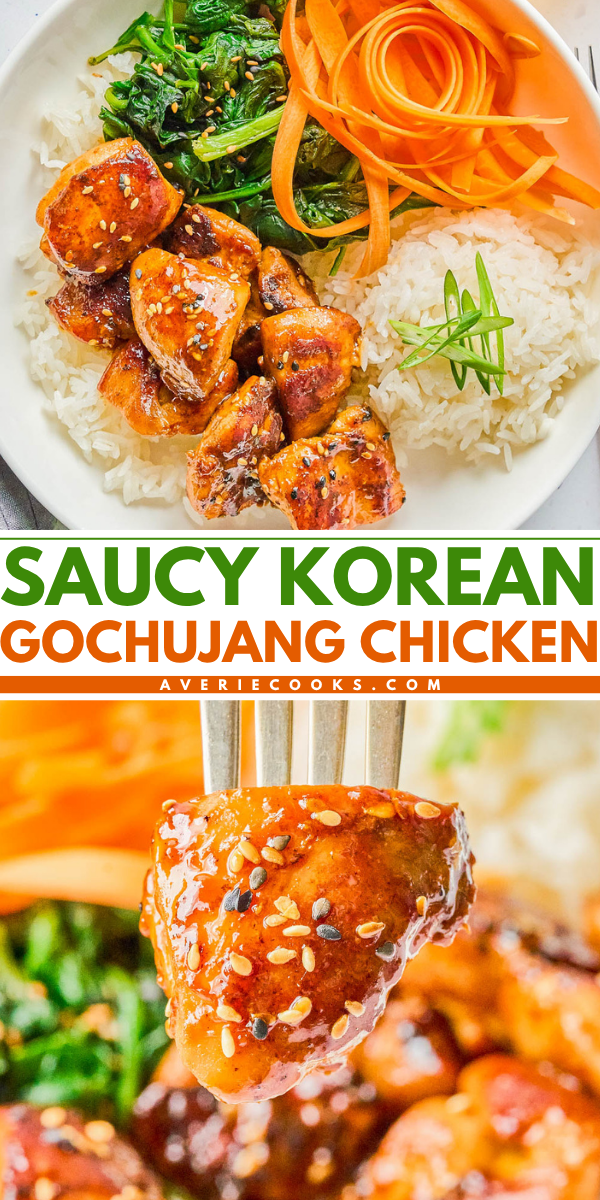
This easy Korean-inspired Gochujang Chicken 🍗🥢is made in one skillet, ready in 30 minutes, and the chicken is tender, juicy, and layered with flavor from soy sauce, ginger, garlic, sesame, and gochujang paste! Never tried gochujang? It’s a little spicy with a hint of sweetness and does wonders to jazz up a pound of chicken!

Easy Gochujang Chicken Recipe
- This is a better-than-takeout chicken skillet recipe that’s Korean-inspired and if you’ve never tried your hand at it, do yourself a favor and start now!
- The chicken has so much flavor thanks to aquick 10-15 minute marinade comprised of soy sauce, garlic, ginger, and gochujang paste. Check out the next section for more details on gochujang paste.
- After the chicken is marinated, I cook it in a skillet and then hit it with a simple sauce made with soy sauce, sguar, rice vinegar, sesame oil, and more. It’s got some zing from the vingar with a bit of sweetnes and clings perfectly to the chicken.
- I love a one skillet dinner that’s ready in 30 minutes because that’s just what busy weeknights call for. Plus, this is high protein and high in flavor!
What Is Gochujang Paste?
- Gochujang paste (I pronounce it like GO-choo-jang but open to correction!) is likely sold in the Asian section of your supermarket near the condiments and sauces. It’s a mainstay in Korean cooking. It’s thick, sticky, and paste-like. but
- It’s probably sold in a small tub like spreadable margarine comes in. Once open, it keeps for months in the fridge because it’s fermented soybeans. Use it to also make my 15-Minute Spicy Korean Chicken, Korean BBQ Chicken Skewers, or any other dish you want to add a pop of flavor.
- The flavor profile is salty, savory, a little bit sweet, and has a bit of heat to it from red chili powder, although I wouldn’t call it spicy. It’s not like sriracha or sambal olek which are far spicier! However, some brands do sell regular and “spicy” versions of gochujang paste so make sure you pay attention to whicy spice level you’re grabbing!
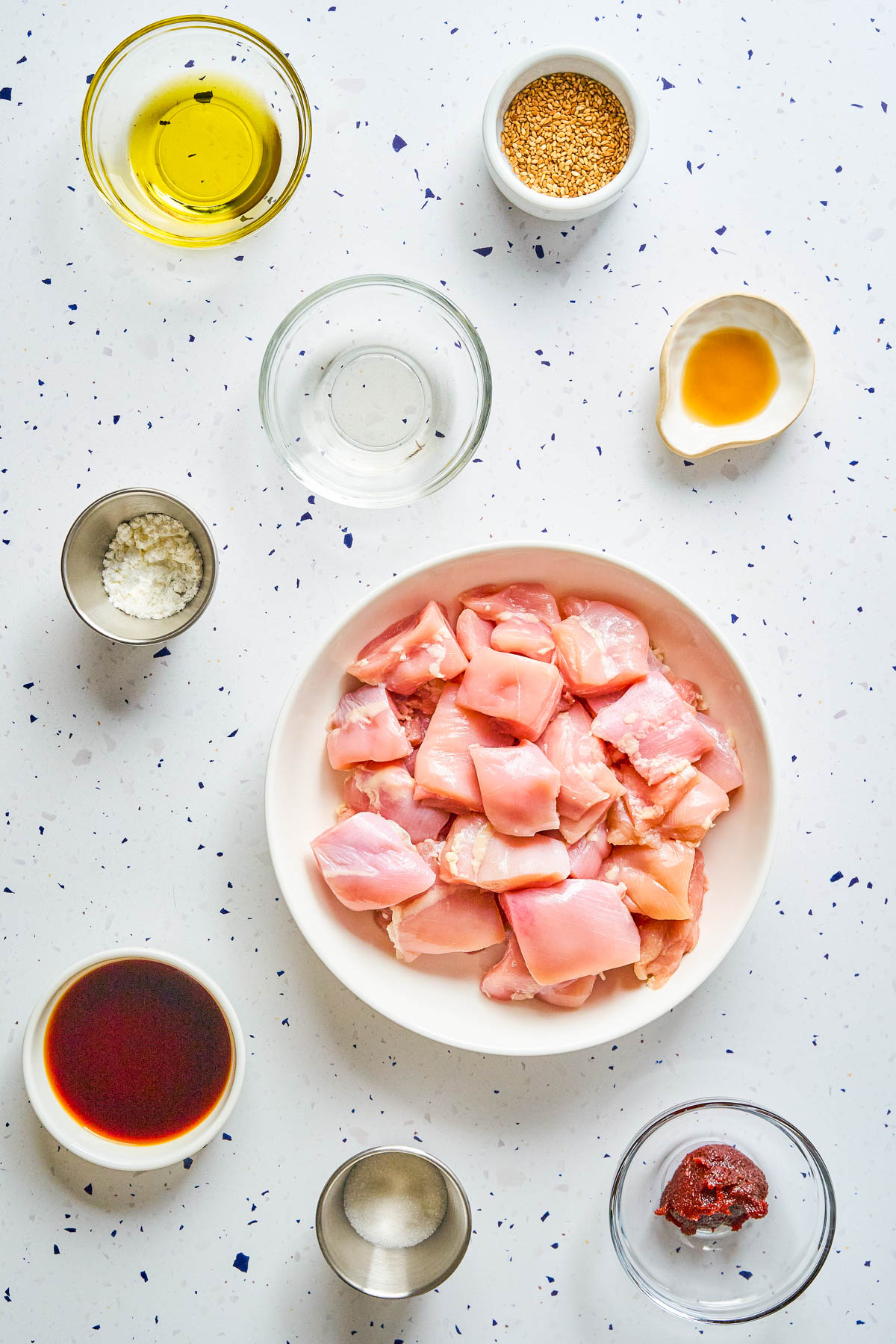
Ingredients in Korean Gochujang Chicken Recipe
Chicken: I like boneless chicken thighs for this recipe because they naturally stay moister and have more flavor. Boneless skinless chicken breasts may be substituted.
Marinade: A quick 10 to 15-minute marinade is made with soy sauce, gochujang paste (or it may be called gochujang sauce), garlic, ginger (fresh ginger or ground ginger), and cornstarch. Tamari or coconut aminos may be substituted for the soy sauce if you’d like to keep this dish gluten-free. You can use either regular or low-sodium soy sauce.
Sauce: Soy sauce, granulated sugar or brown sugar, rice vinegar, sesame oil, sesame seeds, salt, black pepper, additional garlic or ginger as desired, and cornstarch if necessary.
Optional garnishes: Green onions, fresh herbs such as cilantro or basil, additional sesame seeds, red pepper flakes for heat.
Note: Scroll down to the recipe card section of the post for the ingredients with amounts included and for more complete directions.
How To Make Gochujang Chicken Thighs
- Dice the chicken into bite-sized pieces.
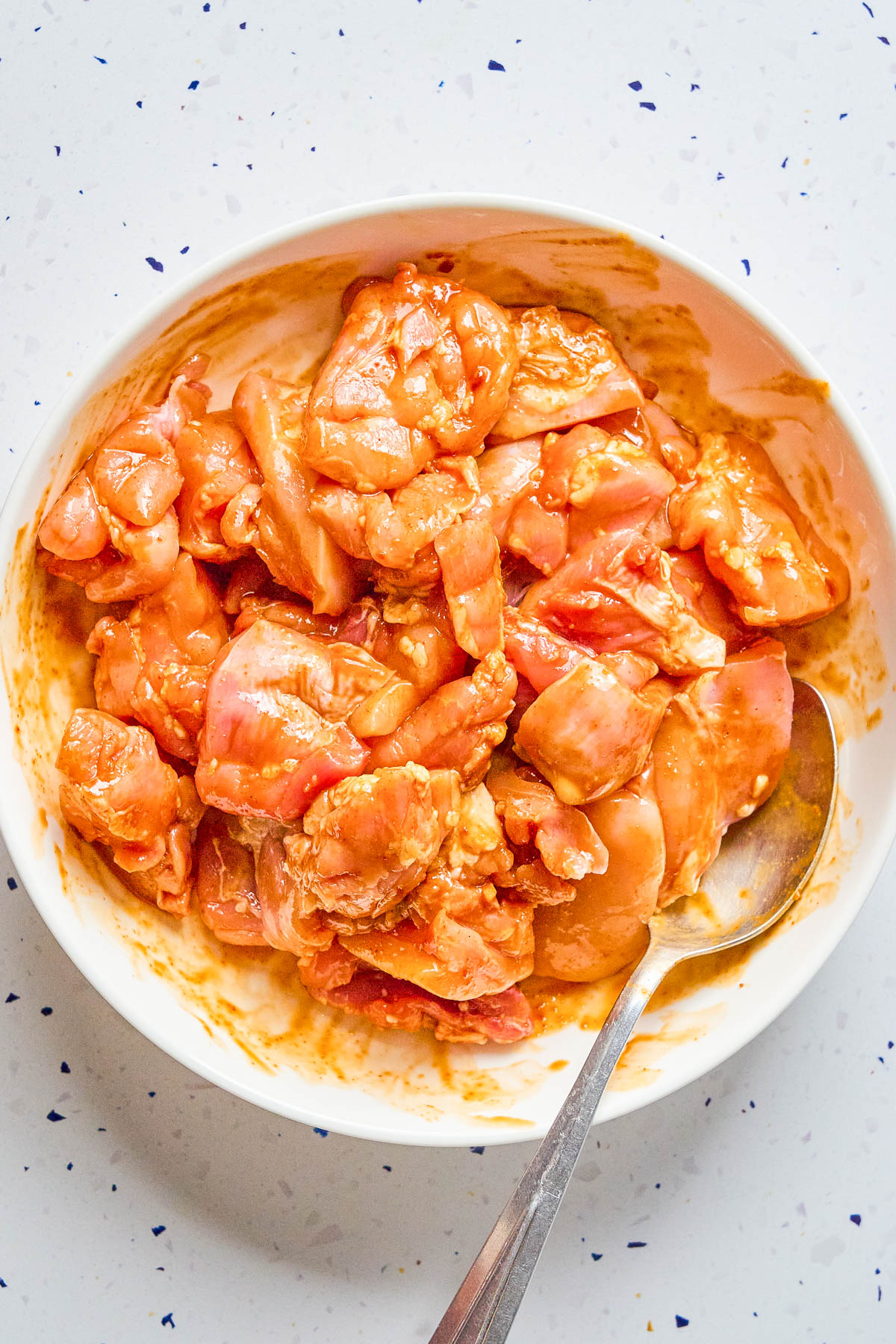
- Combine all the marinade ingredients in a medium bowl, add the chicken pieces to it, toss, and marinate for 10-15 minutes.
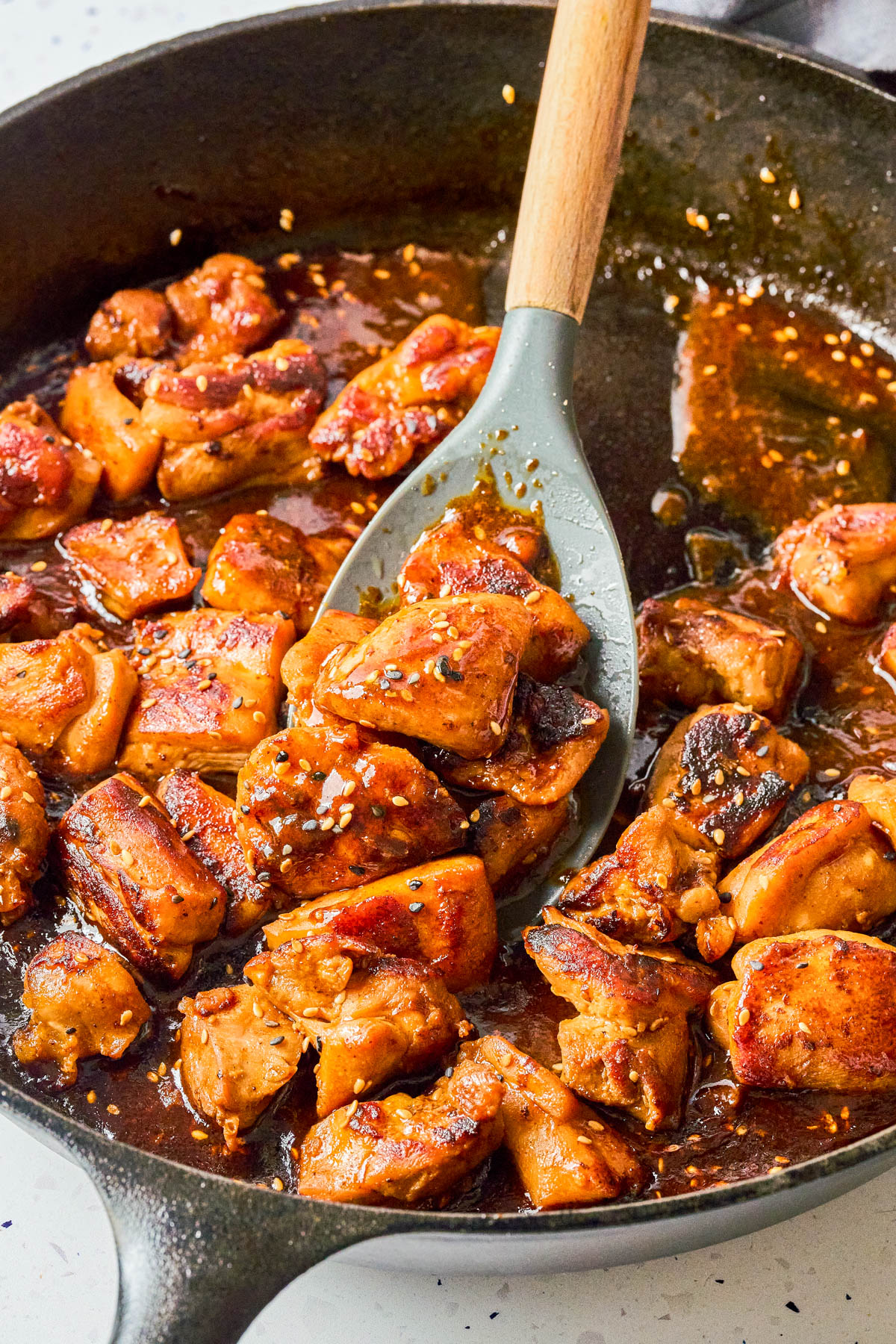
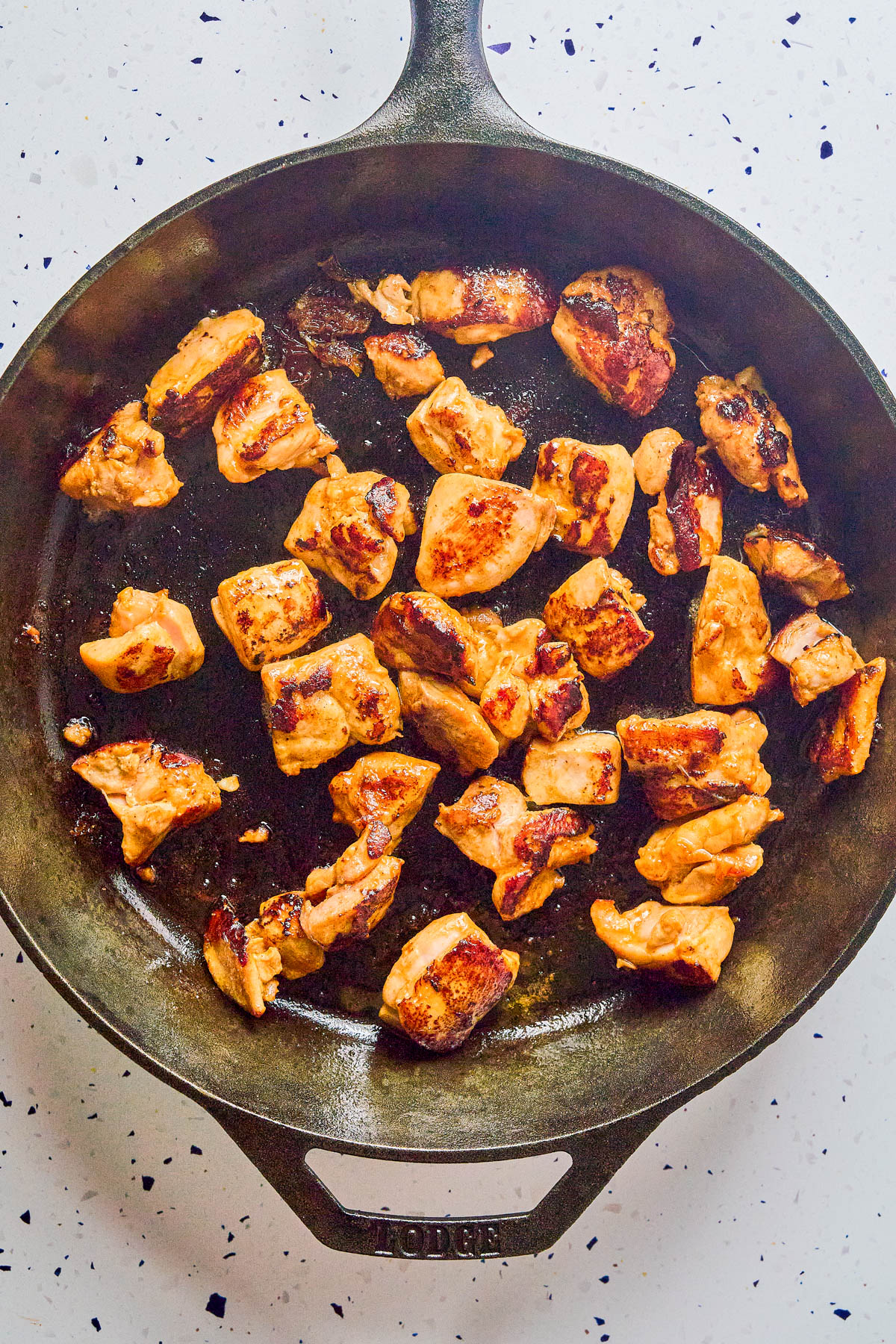
- Heat a large skillet such as a cast iron skillet over medium-high heat, add a bit of olive oil or avocado oil, the chicken, and cook for about 6 minutes, or until just cooked through.
- Add all the sauce ingredients, stir, and simmer for about 1-2 minutes, or until the sauce thickens a bit.
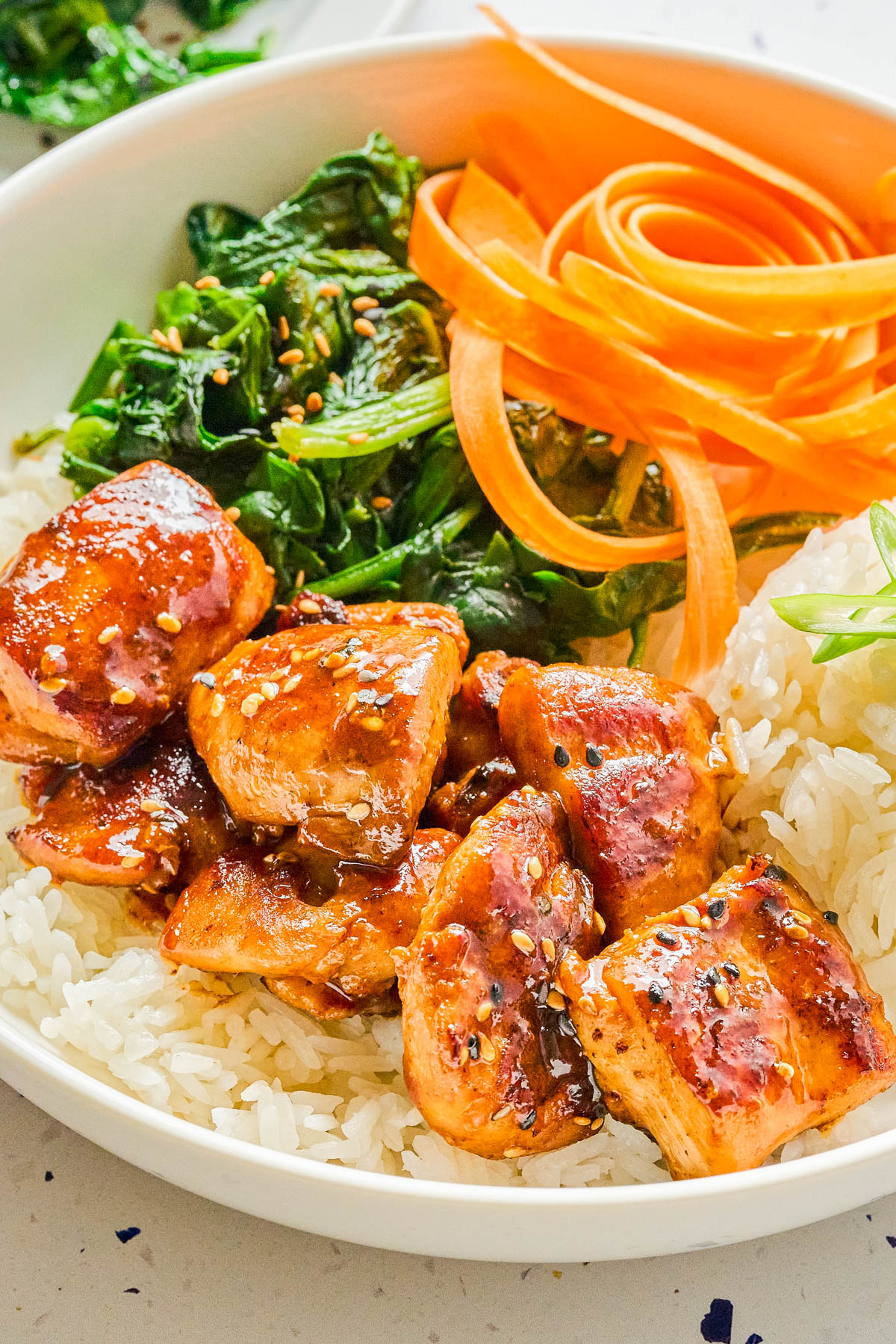
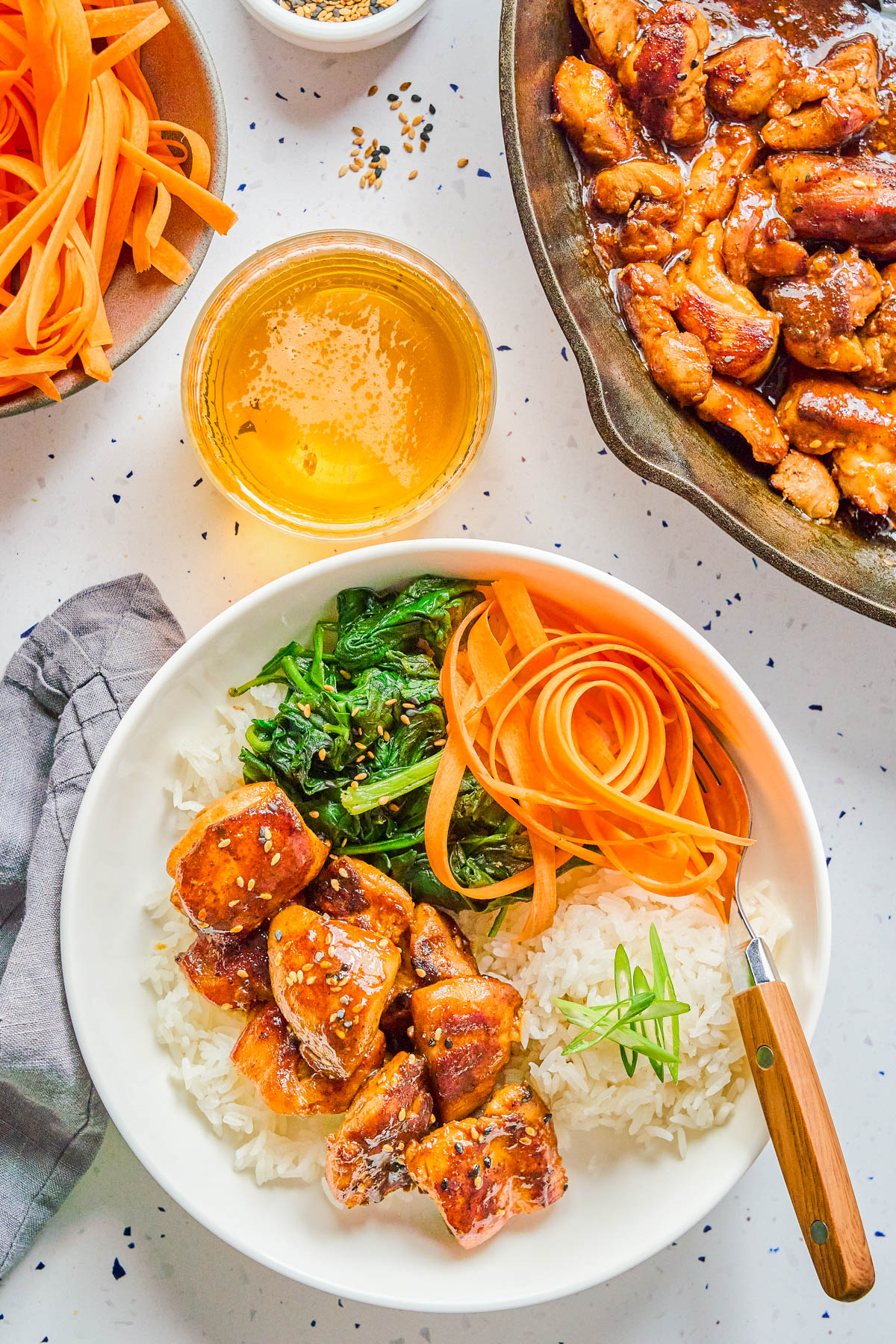
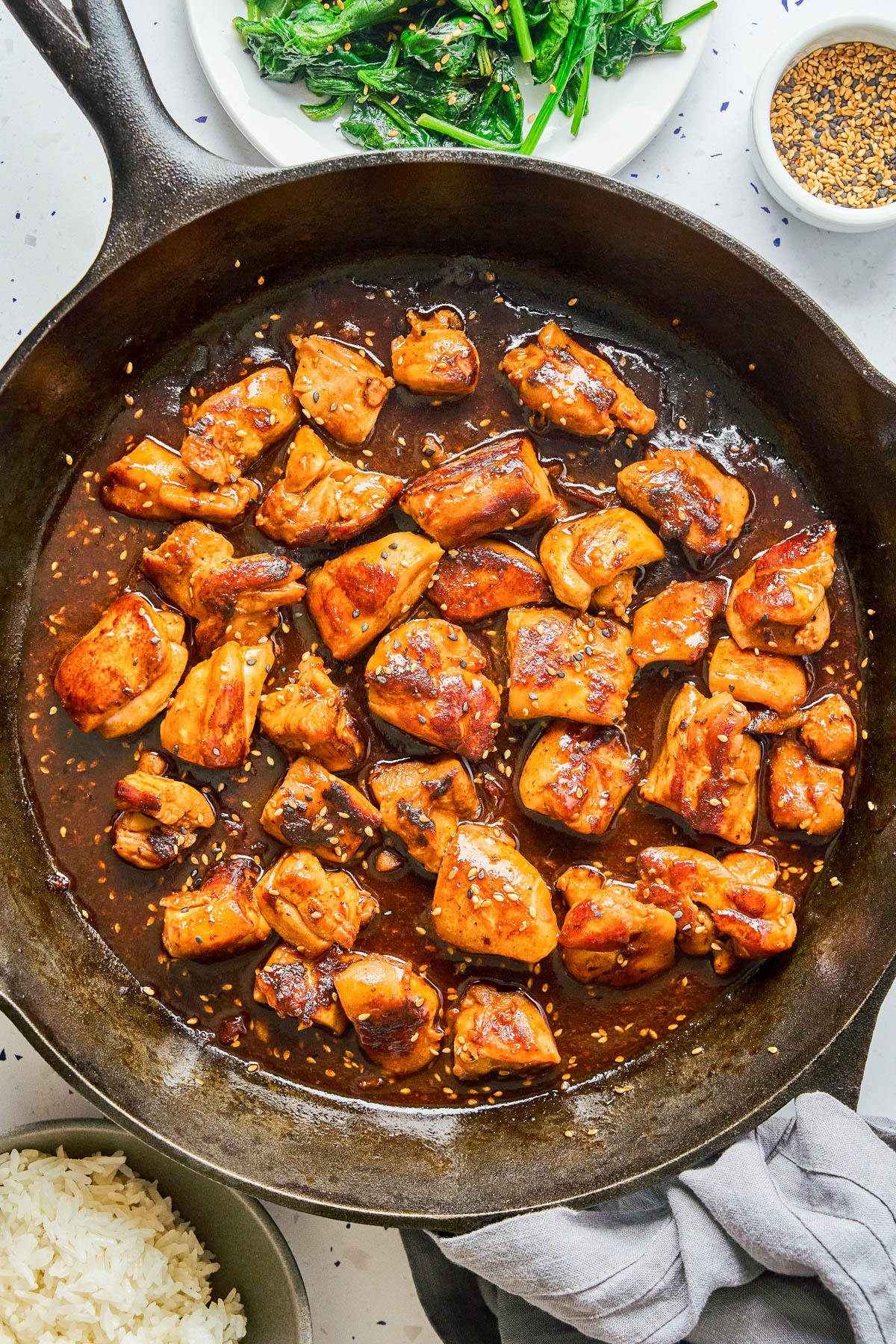
- Garnish as desired and serve immediately with coconut rice, cauliflower fried rice, steamed edamame, broccoli, carrots, bok choy, or your favorite vegetables and sides.
Note: Scroll down to the recipe card section of the post for step-by-step photos and process shots of the cooking process.
Gochujang Chicken
Equipment
- large cast iron skillet (10 to 12 inches) OR
Ingredients
Marinade
- 3-4 tablespoons soy sauce, (I use regular but you can use lite and add salt; use tamari or coconut aminos to keep gluten-free)
- 1-2 tablespoons gochujang paste
- 1 teaspoon toasted sesame seeds
- 1 teaspoon cornstarch
- 1 teaspoon ground ginger, or to taste (or 1-2 teaspoons freshly grated ginger)
- ½ teaspoon garlic powder, or to taste
Chicken
- 1-1.25 pounds boneless chicken thighs, diced into bite-sized pieces (boneless skinless chicken breasts may be substituted)
- 1 tablespoon olive oil, or as needed (another neutral oil like avocado oil may be substituted)
Sauce
- 3-4 tablespoons soy sauce, (I use regular but you can use lite and add salt; use tamari or coconut aminos to keep gluten-free)
- 1 tablespoon granulated sugar, (brown sugar may be substituted)
- 1 tablespoon rice vinegar
- 1-2 teaspoons toasted sesame oil
- salt, as needed and to taste
- freshly ground black pepper, as needed and to taste
Garnishes, optional
- 1 tablespoon fresh herbs (cilantro, basil), finely minced
- 1 teaspoon sesame seeds
- 1 whole green onions, sliced into thin rounds
Instructions
- Marinade: To a medium bowl, add all the sauce ingredients, chicken, toss to combine and coat, and marinate for about 10-15 minutes (or if you have time, 30-60 minutes but place the bowl in the fridge).

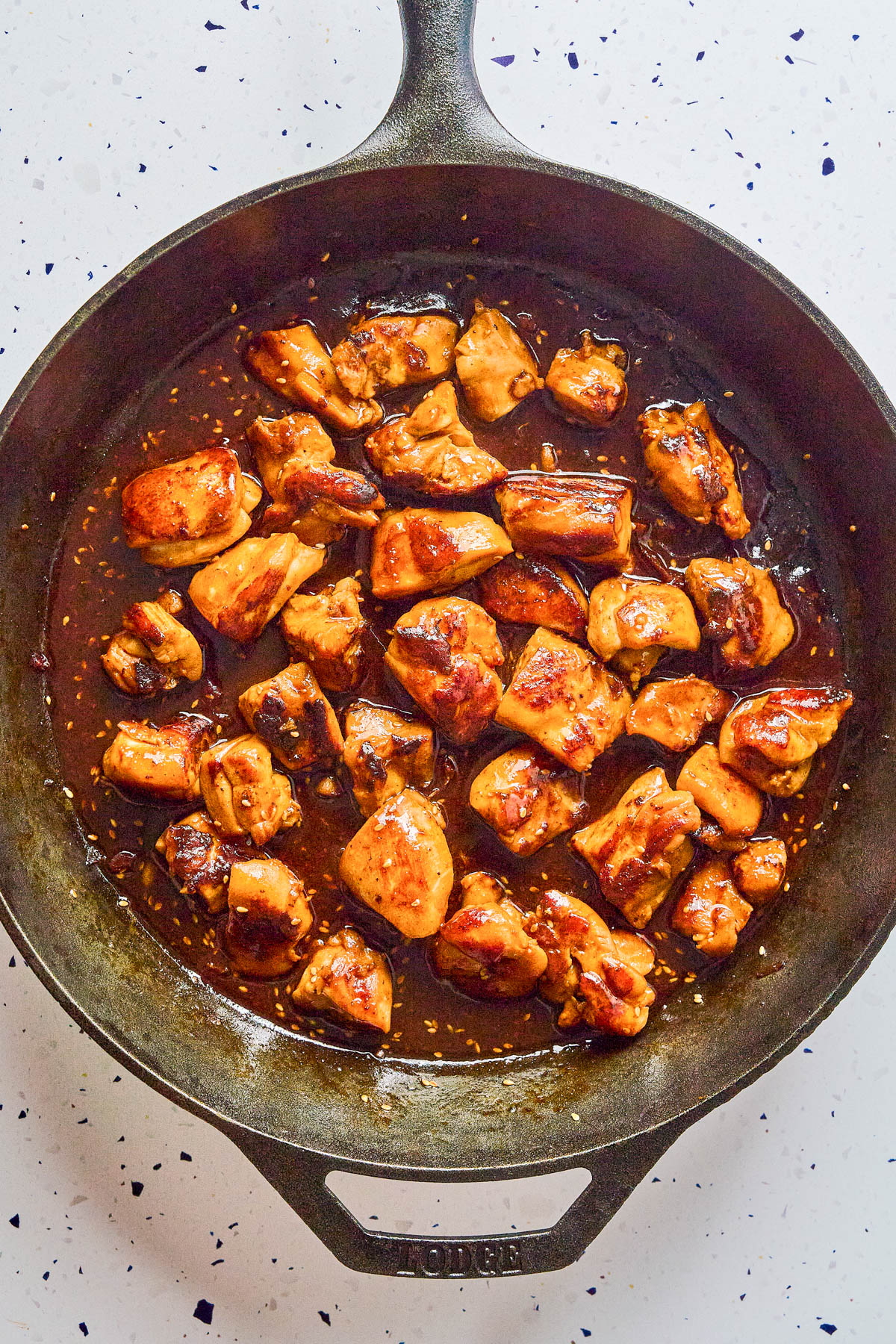
- Chicken: To a large skillet (if you have cast iron, it's great here), add the oil, chicken (discard excess marinade), and cook over medium-high heat for about 6-7 minutes, or as needed until the chicken is cooked through. Stir and flip frequently to ensure even cooking.
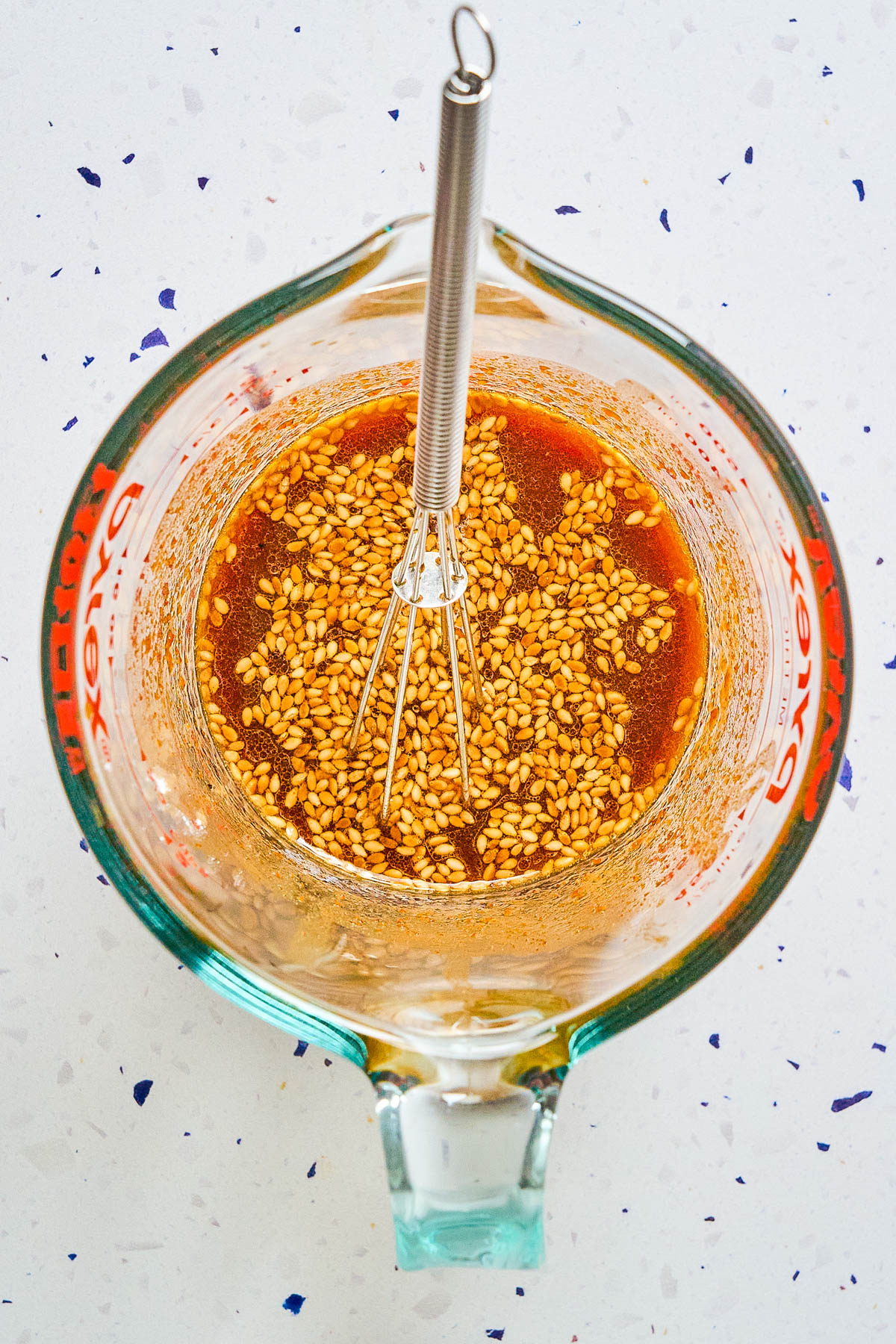
- Sauce: While the chicken is cooking, to a small bowl or glass measuring cup, add all the sauce ingredients (except the garnishing items) and whisk to combine.
- After the chicken has cooked through, slowly and evenly pour the sauce over the chicken, scrape up any browned bits from the bottom of the skillet, and allow the sauce to simmer for about 1-2 minutes or as needed to thicken it to your liking; stir nearly continuously which will help encourage the sauce to thicken.
- Sauce Thickening Tips: Depending on how much soy sauce you used, and the exact amount of chicken, and your preference for how thick the sauce is, optionally if you want it a bit thicker, sprinkle 1/2 teaspoon cornstarch directly into the sauce as it's simmering, and continue to stir. The combination of the heat, cornstarch, and stirring will cause the sauce to thicken pretty quickly. Remember that sauce always looks looser in the skillet and as the chicken cools out of the skillet, it will tighten up more.
- Garnishing: Taste, and if desired, add additional salt, pepper, red pepper flakes for heat, additional sesame seeds, green onions, herbs, etc. and serve.
Notes
Nutrition
Nutrition information is automatically calculated, so should only be used as an approximation.
©averiecooks.com. Content and photographs are copyright protected. Sharing of this recipe is both encouraged and appreciated. Copying and/or pasting full recipes to any social media is strictly prohibited.
more easy Asian Inspired Chicken recipes